
Pine nut production is a fascinating mix of forestry, agriculture, seasonal labor, and global trade. Unlike many common crops, pine nuts do not come from large farm fields. They come from specific pine tree species that grow in forests, mountain landscapes, and dry woodland regions around the world. That means pine nut production is shaped by climate, altitude, tree species, harvest timing, and post-harvest handling. It is also one of the reasons pine nuts are considered a premium ingredient in many markets. From the cones on the tree to the cleaned kernels in a packet, the journey is long, careful, and often labor-intensive.
If you have ever enjoyed pine nuts in pesto, salads, grain bowls, baked goods, or premium snacks, you’ve already experienced the result of a complex production process. In this guide, we’ll explore how pine nut production works, where it happens, which countries are most important, what affects quality, why prices are high, and how sustainable production can help protect forests for the future.
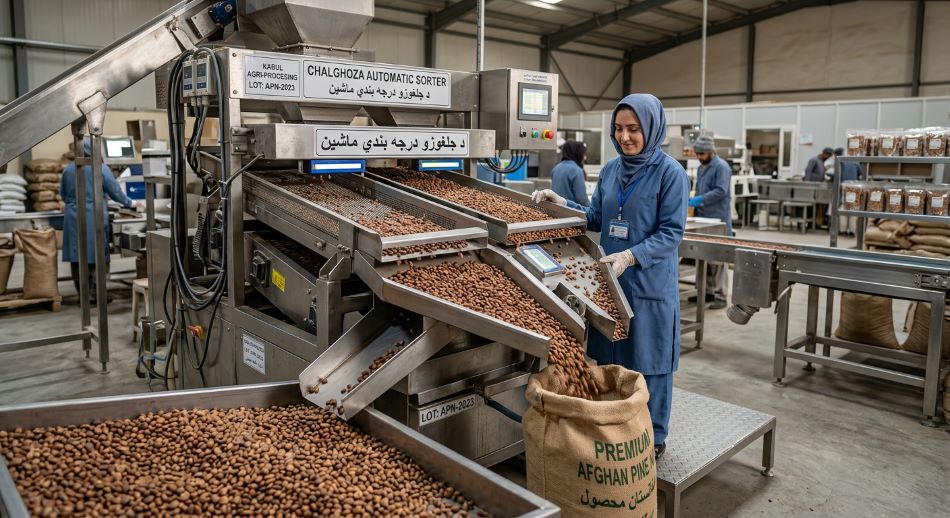
Pine nut production refers to the full process of growing pine trees that produce edible seeds, harvesting the cones, extracting the seeds, shelling them, cleaning them, sorting them, and preparing them for sale or export.
It includes several stages:
Because pine nuts come from trees rather than annual crops, the production cycle is slower and more dependent on forest ecosystems. That makes pine nut production very different from crops like wheat, rice, or almonds.
Pine nut production takes place in several regions of the world. Different countries produce different species of pine nuts, and each origin has its own market reputation.
Some regions are known for high-volume supply, while others are known for premium or specialty varieties. For example, China is often considered the largest producer by volume, while Afghanistan and parts of the Mediterranean are well known for premium-quality pine nuts.
Not every pine tree produces edible nuts suitable for commercial use. Pine nut production depends on specific species.
Each species produces pine nuts with different sizes, flavors, oil contents, and market uses. Some are prized for their buttery, delicate flavor, while others are valued for volume or regional importance.
Pine nut production starts with the pine tree itself. Pine trees are long-lived and often slow-growing. It can take years before a tree produces cones in quantities suitable for harvest.
Because the trees take time to mature, pine nut production is a long-term investment. Forest health and careful management are important for consistent yield.
Climate plays a major role in pine nut production. Pine trees need the right balance of temperature, moisture, sunlight, and elevation.
Many pine nut-producing regions are in rugged terrain. This helps protect forests from intensive farming but also makes harvesting more difficult. The geography strongly influences production costs and final quality.
Harvesting is one of the most important parts of pine nut production. It is also one of the most labor-intensive.
In some regions, harvesting is done by hand with simple tools. In others, the process may be more organized or semi-mechanized. Still, pine nut production remains labor-heavy compared with many other crops.
The quality of pine nut production depends not only on harvesting but also on what happens after the cones are collected.
This stage is critical because pine nuts contain natural oils that can go rancid if they are not handled properly. Good processing improves shelf life, appearance, and taste. Poor processing can lead to spoilage, breakage, and lower market value.
Pine nut production is costly for several reasons.
Pine trees take years to mature and produce useful cone harvests.
Cones often need to be gathered by hand in remote forest areas.
Not every cone produces a large amount of edible seed.
The shelling and sorting stages require care and time.
Many pine nut forests are far from roads and processing centers.
Pine nuts are a premium food ingredient used in many cuisines.
Because of these factors, pine nut production is more expensive than production of many other nuts or seeds.
China is often recognized as the largest producer by volume. It has significant forest resources, strong processing systems, and export capacity.
Afghanistan is highly regarded for chilgoza pine nuts, especially in premium markets. The product is often forest-harvested and valued for its taste and quality.
Pakistan also produces chilgoza pine nuts and is important in regional trade.
Stone pine nuts from Italy, Spain, Portugal, and neighboring areas are famous in traditional European cooking.
Pinyon pine nuts are important to Indigenous communities and regional food systems.
These regions are also key contributors, especially for species like Korean pine and Siberian pine.
Each country plays a different role in the global pine nut production landscape.
Quality is one of the biggest factors in the success of pine nut production.
The final quality of the product depends on:
If any part of production is weak, the final product may lose value.
Sustainable pine nut production is essential for long-term forest health and supply stability.
Since many pine nut-producing systems are tied to natural forests, sustainability is not just about protecting the environment. It also supports the communities that depend on the harvest for income.
In many countries, pine nut production is a major source of seasonal income for rural families. Harvest season can be one of the most important times of the year.
This is especially true in regions where agriculture is limited by terrain or climate. Pine nut production can be a valuable forest-based livelihood.
Pine nuts are used around the world in both retail and foodservice markets. That makes export an important part of the production chain.
Export quality depends on:
A strong pine nut production system can support repeat business and premium market positioning.
Once pine nut production is complete, the kernels are used in many dishes and products.
Because they have a mild, buttery flavor, they fit well into both savory and sweet recipes. Their culinary flexibility adds to their value.
Buyers often want to know whether the production process was handled properly. There are a few signs.
That is why sourcing from reliable producers and exporters matters so much.
The future of pine nut production depends on balancing demand with sustainability. As global interest in healthy, premium ingredients continues to grow, demand for pine nuts is likely to remain strong.
If these areas improve, pine nut production could become more stable and profitable while protecting the forests that make it possible.
Pine nut production is the process of growing pine trees, harvesting cones, extracting seeds, shelling kernels, and preparing them for market.
China is generally considered the largest producer by volume.
Species, climate, harvest timing, processing, and storage all affect quality.
It is labor-intensive, slow, and depends on limited forest-grown supply.
It can be sustainable when harvesting is done carefully and forest ecosystems are protected.
Pine nut production is a remarkable process that combines nature, labor, craftsmanship, and trade. From slow-growing pine trees to the final kernels used in kitchens around the world, every step matters. The quality of pine nut production depends on the tree species, the growing region, the harvest method, and the care taken during drying, shelling, cleaning, and storage.
Countries like China, Afghanistan, Pakistan, and several Mediterranean and northern forest regions all play important roles in the global supply of pine nuts. Whether the goal is premium culinary use, wholesale trade, or export, strong production practices are essential. As demand continues to grow, sustainable pine nut production will be increasingly important for both the forests and the communities that depend on them.