
Harvesting pine nuts is a seasonal, skilled, and often labor-intensive process that turns pine cones into one of the world’s most prized natural foods. From steep mountain forests to drying areas, sorting tables, and finally to kitchens and export markets, the journey of pine nuts is much more involved than most people realize. If you’ve ever enjoyed pine nuts in pesto, salads, grain bowls, or baked goods, there’s a good chance you’ve benefited from careful harvesting, drying, shelling, and handling long before the nuts reached your plate.
What makes harvesting pine nuts especially interesting is that it often happens in remote forest regions where the trees grow slowly, the terrain is difficult, and the work requires patience and timing. Different countries, tree species, and local traditions all shape how the harvest is done. In this guide, we’ll explore when pine nuts are harvested, how the process works, what tools and techniques are used, why origin matters, and how sustainable harvesting helps protect forests for the future.
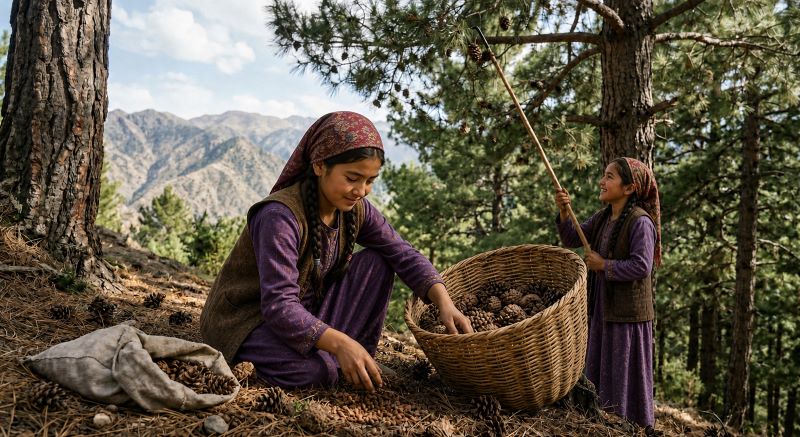
Harvesting pine nuts is more than just picking a crop. It is a process that affects:
Since pine nuts are often gathered from wild or semi-wild forests, the harvest is tied closely to the health of the ecosystem and the skill of the people collecting them. Poor harvesting can damage trees, reduce future yields, or lower the quality of the nuts. Good harvesting, on the other hand, preserves both the product and the forest.
Pine nuts are harvested in many parts of the world, but the process and the species vary by region.
In some regions, the nuts come from mountain forests. In others, they come from managed woodlands or mixed forest systems. The growing environment influences the flavor, size, and supply of the nuts.
For example:
The timing of the harvest depends on the species and region, but pine nuts are usually collected once the cones are mature.
Harvesting often takes place during late summer or autumn, though exact timing varies. In some places, local people watch the trees closely to know when the cones are ready. The timing must be right because immature cones do not release quality seeds, and overripe cones may lose seeds before they are collected.
The process of harvesting pine nuts can be manual, semi-mechanized, or organized through community forestry systems. In many forest regions, it is still done largely by hand.
Harvesters identify cones that are ready for collection. This requires experience and local knowledge.
Cones may be gathered from the tree, from the forest floor, or by shaking branches depending on the species and terrain.
The cones are left in the sun or in dry storage areas until they open naturally.
Once the cones open, the seeds are removed by hand or with simple tools.
The hard outer shell is removed to reveal the edible kernel.
The kernels are cleaned to remove debris, broken pieces, and damaged nuts.
The finished pine nuts are packed into bags, boxes, or containers for local use, wholesale, or export.
Because each step affects quality, harvesting pine nuts is as much about handling as it is about collection.
The tools used depend on the region and the type of pine forest.
In remote mountain areas, many harvesters use very simple equipment. That makes the work physically demanding but also low-impact on the forest when done carefully.
In many communities, harvesting pine nuts is a traditional skill passed down through generations. Families often work together, and harvest season can be one of the most important times of the year.
Traditional methods may include:
These methods are often slower than modern industrial systems, but they help protect quality and support local livelihoods. They also keep the harvest tied to local culture and knowledge.
Afghanistan is especially well known for chilgoza pine nuts. These grow in forested mountain regions and are often harvested by local communities.
Because the trees grow in difficult environments, harvesting pine nuts in Afghanistan requires more effort than in easier-to-reach areas. But the quality of the nuts and the premium market reputation make the crop highly valuable.
Harvesting pine nuts is not easy. Several challenges affect the process.
Many pine forests are located on mountain slopes, making access hard.
The work is physically demanding and time-consuming.
Rain, wind, or early frost can damage cones or affect drying.
Pests, fire, drought, and land damage can reduce cone production.
Remote areas may not have roads, storage, or processing equipment.
If cones are collected too early or dried poorly, the final product suffers.
These challenges explain why pine nuts are expensive and why the harvest must be handled carefully.
The way pine nuts are harvested has a direct effect on quality.
That’s why buyers often care not just about where pine nuts come from, but how they were harvested and processed.
Sustainable harvesting is essential for the future of pine nuts. Since many pine nuts come from long-lived trees in natural forests, the resource must be managed wisely.
When harvesters respect the forest, pine nuts can remain a renewable source of food and income for many years. Sustainable harvesting is not just good for nature—it is also good for business.
Harvesting pine nuts does not end when the cones are collected. What happens after collection is just as important.
If these steps are done poorly, even high-quality pine nuts can become stale or damaged. Proper post-harvest handling protects the value created during harvesting.
Once harvested and shelled, pine nuts are usually sorted into grades based on quality.
Higher-grade pine nuts are more uniform, cleaner, and usually more valuable. Lower grades may still be useful for processing or cooking, but they often sell at lower prices.
Pine nuts are often expensive, and harvesting is one of the main reasons.
When harvesting is difficult and supply is limited, prices rise. That is why premium pine nuts are often sold at a higher price than many other nuts and seeds.
Once harvested properly, pine nuts become a versatile ingredient in many foods.
Because they are rich and mild, pine nuts can be used in both savory and sweet recipes. Their culinary value is directly connected to the quality of the harvest.
If you buy pine nuts, freshness is important. Freshly harvested and properly handled nuts should:
Since pine nuts contain natural oils, they can go bad faster than some other nuts if they are not stored well. Good harvesting and handling help preserve freshness.
Whether you are a home cook, retailer, importer, or food manufacturer, it helps to know something about harvesting pine nuts before you buy them.
Buyers who understand harvesting can make better sourcing decisions and avoid low-quality products.
It is the process of collecting mature pine cones, drying them, removing the seeds, shelling them, and preparing the edible kernels for use or sale.
Usually in late summer or autumn, depending on the pine species and region.
Yes. It is often labor-intensive and takes place in rugged forest terrain.
Because it affects flavor, quality, shelf life, sustainability, and price.
Yes, they contain healthy fats, protein, and important minerals when eaten in moderation.
Harvesting pine nuts is a remarkable process that combines nature, skill, patience, and tradition. From mountain forests to drying areas and sorting tables, every step matters. The way pine nuts are harvested affects their quality, flavor, price, and shelf life, which is why careful handling is so important.
Whether the nuts come from Afghanistan, the Mediterranean, China, North America, or another region, good harvesting practices help ensure that the product remains valuable and sustainable. For buyers, chefs, and food businesses, understanding the harvest gives you a deeper appreciation for the ingredient and helps you make smarter choices.