
Pine nuts vs almonds is a useful comparison for consumers, food manufacturers, chefs, nutrition-conscious buyers, and businesses sourcing premium nuts. Both are nutrient-dense foods that provide healthy fats, minerals, protein, and culinary versatility—but they differ considerably in flavor, texture, fatty-acid composition, typical applications, processing, and market positioning.
If you are deciding between pine nuts and almonds for everyday nutrition, cooking, baking, pesto, snacks, food manufacturing, or commercial sourcing, understanding these differences can help you choose the right nut for the application.
This comprehensive guide compares pine nuts vs almonds across nutrition, health research, taste, texture, culinary uses, processing, innovation, sustainability considerations, and sourcing.
Quick answer: Pine nuts are known for their delicate, buttery flavor, soft texture, and distinctive fatty-acid profile, while almonds offer a firmer texture, mild flavor, substantial vitamin E and fiber content, and broad applications in snacks, baking, beverages, and food manufacturing.
| Feature | Pine Nuts | Almonds |
|---|---|---|
| Botanical source | Pine trees (Pinus species) | Almond tree (Prunus dulcis) |
| Flavor | Delicate, buttery, slightly resinous | Mild, nutty, slightly sweet |
| Texture | Soft, tender and creamy | Firm, crisp or crunchy |
| Fat profile | Rich in unsaturated fats; contains pinolenic acid | Rich in monounsaturated fats |
| Protein | Moderate | Moderate to high |
| Fiber | Depends on variety and processing | Generally high |
| Vitamin E | Present | Particularly notable |
| Magnesium | Good source | Good source |
| Common culinary use | Pesto, sauces, salads, Mediterranean and Middle Eastern dishes | Snacks, baking, flour, butter, milk alternatives |
| Premium positioning | Often associated with specialty and gourmet foods | Broad mainstream and premium markets |
| Processing formats | Whole kernels, pieces, roasted kernels, oil, butter | Whole, sliced, slivered, flour, meal, butter, milk |
| Distinctive compound | Pinolenic acid | Vitamin E, polyphenols and monounsaturated fats |
The exact nutritional composition varies by species, cultivar, growing region, processing method, and serving size.
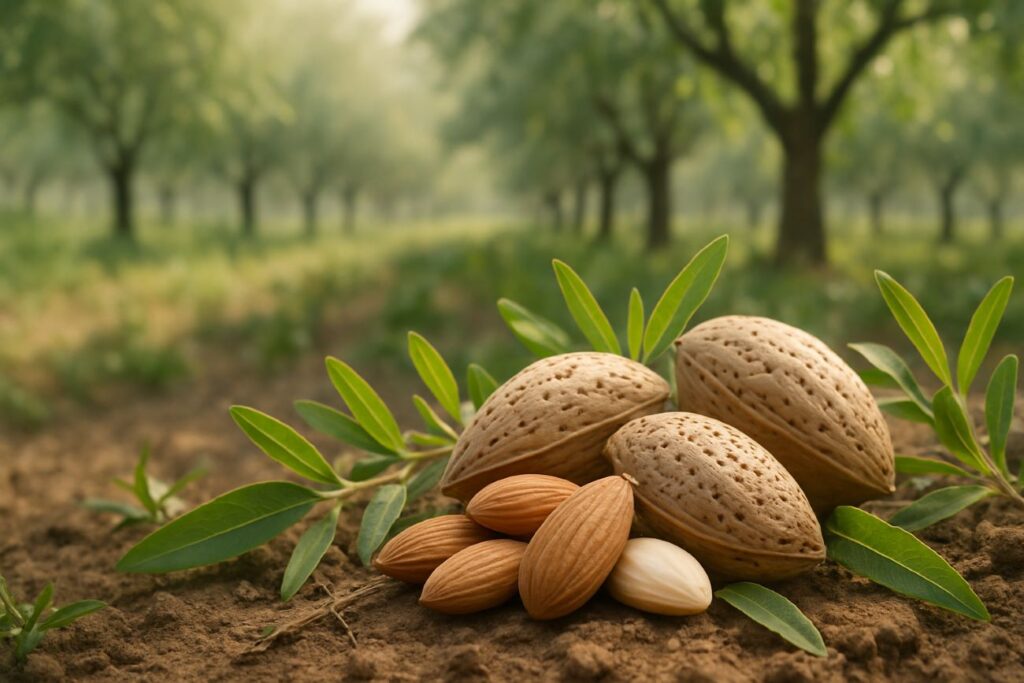
Pine nuts are edible seeds harvested from selected species of pine trees. Unlike many common culinary nuts, they are technically seeds rather than true botanical nuts.
They have a distinctive soft, buttery texture and subtle pine-like flavor, making them particularly valuable in recipes where the nut needs to contribute richness without overpowering other ingredients.
Pine nuts are widely used in:
Pine nuts also have an unusual lipid profile. Research on Pinus species has identified distinctive fatty acids including pinolenic acid, a fatty acid that has attracted scientific interest because of its potential metabolic and appetite-related effects.
Almonds are the edible seeds of the almond tree, Prunus dulcis. They are among the world’s most widely consumed tree nuts and are available in numerous forms.
Common commercial forms include:
Their mild flavor and firm texture make almonds exceptionally versatile in both consumer and industrial food applications.
Both pine nuts and almonds are nutrient-dense foods, but their nutritional profiles are not identical.
The most important differences relate to fatty acids, protein, fiber, vitamin E, minerals, and overall energy density.
Both foods contain predominantly unsaturated fats.
Almonds are particularly recognized for their monounsaturated fatty acids, while pine nuts contain a distinctive mixture of unsaturated fatty acids, including pinolenic acid.
Scientific research describes pinolenic acid as a characteristic fatty acid of pine nut oil. Reviews report that it commonly represents approximately 14–19% of total fatty acids in pine nut oil, although composition varies by species and source.
This makes pine nuts scientifically interesting beyond their conventional culinary role.
The presence of a particular fatty acid does not automatically mean that eating pine nuts produces a specific medical outcome.
Research on pinolenic acid is promising, but human evidence remains considerably more limited than the research base for common dietary patterns and established nutrients.
Both nuts provide plant protein.
Almonds generally have a strong nutritional reputation as a protein-containing snack and ingredient, while pine nuts can contribute protein alongside their substantial fat content.
For people building meals around plant foods, either can contribute to overall protein intake.
However, neither should be viewed as a complete replacement for major protein sources when a diet requires substantially higher protein intake.
For food manufacturers, the protein difference can become relevant when choosing ingredients for:
Almonds are particularly useful when dietary fiber is a priority.
Fiber contributes to normal digestive health and can also help increase the overall satiety of meals.
Whole pine nuts also contain dietary fiber, but their nutritional profile differs depending on species and preparation.
For consumers choosing between the two primarily for fiber, almonds can be a practical ingredient to consider.
One of the best-known nutritional characteristics of almonds is their vitamin E content.
Vitamin E functions as an antioxidant and contributes to protection of cells from oxidative stress.
Scientific reviews examining almonds have highlighted their combination of unsaturated fats, fiber, vitamin E, minerals, and polyphenols.
This helps explain why almonds have attracted extensive research attention in relation to cardiometabolic health.
Pine nuts also contain micronutrients and antioxidant compounds, but almonds are particularly well known for vitamin E.
Both foods provide important minerals, including magnesium.
Mineral concentrations can vary significantly depending on:
Pine nuts can also provide minerals such as magnesium, phosphorus, zinc, copper, and manganese.
Almonds are likewise a useful source of magnesium and other micronutrients.
Therefore, rather than asking which nut is universally “healthier,” it is more useful to ask:
Which nutritional characteristics matter most for your diet or product?
Tree nuts have been extensively studied in relation to cardiovascular health, but evidence should be interpreted carefully.
Research reviews on almonds have reported associations and clinical-trial evidence involving factors such as LDL cholesterol, blood pressure, glycemic responses, and other cardiometabolic measures. A 2024 review concluded that recent meta-analyses suggest almond consumption does not result in weight gain and is associated with small reductions in LDL cholesterol and diastolic blood pressure in studied populations.
Another 2024 review examined almond consumption in relation to cardiovascular health and the gut microbiome, highlighting potential effects involving lipid profiles, glycemic control, blood pressure, oxidative stress, and gut-related mechanisms.
Pine nuts are also being investigated because of their distinctive fatty acids, especially pinolenic acid.
However, the research base is different.
Almond research is substantially more extensive, particularly for long-term dietary and cardiometabolic outcomes.
Pine nut research includes promising mechanistic and small human studies, but additional long-term human research is needed.
Pinolenic acid is one of the most interesting scientific characteristics associated with pine nuts.
Research has investigated whether pine nut oil and pinolenic acid influence:
Some controlled human studies have reported short-term effects on gut hormones and appetite following specific preparations of hydrolyzed pine nut oil. One crossover study involving healthy and overweight/obese participants reported increased GLP-1 and reduced ghrelin following particular doses of hydrolyzed pine nut oil.
Another human study reported changes in appetite and food intake after a specific Korean pine nut oil preparation.
But the evidence is not uniformly positive. Another randomized crossover study found that a tested dose of pine nut triacylglycerol did not significantly suppress appetite or energy intake compared with placebo.
Pine nuts and pine nut oil are scientifically interesting, but it would be inaccurate to market them as a proven weight-loss treatment.
The strongest evidence supports continued research, not exaggerated health claims.
Both pine nuts and almonds are energy-dense foods.
That means portion size matters.
At the same time, calorie density does not automatically mean a food causes weight gain.
Research on almonds has specifically investigated body weight, satiety, body composition, and cardiometabolic outcomes. Current reviews report that almond consumption does not appear to promote weight gain and may support favorable outcomes within appropriate dietary patterns.
Pine nuts have generated additional interest because of research into pinolenic acid and appetite-regulating mechanisms.
However, the evidence does not justify presenting pine nuts as a standalone weight-loss food.
A better nutrition principle is:
Portion size + total dietary pattern + overall energy intake matter more than choosing a single “best” nut.
Nutrition is only one part of the comparison.
For chefs and food manufacturers, flavor and texture can be even more important.
Pine nuts typically have:
Their flavor can become more pronounced when lightly toasted.
This makes them particularly effective in dishes where a premium finishing ingredient is desired.
Almonds typically have:
Almonds can therefore provide more structural crunch than pine nuts.
The right choice depends on the recipe.
Pine nuts have a particularly strong culinary association with pesto.
Traditional pesto commonly combines basil, olive oil, garlic, hard cheese, and pine nuts.
Pine nuts contribute a creamy, buttery texture that integrates well with the oil and cheese.
Almonds can also be used as a pesto ingredient, particularly in alternative recipes, but they produce a different flavor and texture.
Pine nuts are the more characteristic ingredient.
Almonds can be an effective substitute when a firmer, more pronounced nut texture is desired.
Almonds have a major advantage in baking because they can be processed into flour and meal.
Almond flour is widely used in:
Pine nuts are more commonly used as a whole or chopped ingredient.
They can add:
For large-scale bakery production, almonds therefore offer an exceptionally broad range of ingredient formats.
Food manufacturers should evaluate more than nutrition.
Important commercial considerations include:
Almonds can be purchased as:
Pine nuts can be supplied as:
This flexibility allows manufacturers to select the format that best matches their product.
Modern nut processing increasingly focuses on maintaining quality while improving efficiency, food safety, shelf life, and consistency.
Important areas of innovation include:
Modern optical and automated sorting systems can help identify differences in:
Temperature, humidity, oxygen exposure, and packaging can influence nut quality and shelf life.
Controlled storage can help reduce quality deterioration.
Packaging innovations increasingly focus on controlling:
This is particularly important for high-fat foods because oxidation can negatively affect flavor and quality.
The market is expanding beyond whole nuts.
Examples include:
Food buyers increasingly expect better visibility into:
For premium nut exporters, transparent sourcing and documented quality processes can become important competitive differentiators.
Sustainability is more complicated than simply declaring one nut environmentally superior.
Environmental performance can vary according to:
Almond production has received significant attention regarding water use, particularly in major producing regions.
Pine nuts have a different production model because many commercially important pine nuts come from forest or woodland systems rather than conventional orchard production.
However, pine nut supply chains also face challenges involving:
Therefore, buyers should evaluate the specific origin and supply chain, rather than making broad assumptions about either product.
Not all pine nuts are identical.
Species, origin, harvesting conditions, processing, storage, and handling can influence:
For premium buyers, country of origin and processing standards can therefore be important purchasing factors.
Afghan pine nuts represent a distinctive category within the international pine nut market, particularly for buyers looking for products originating from Afghanistan’s pine forests.
For an exporter, origin storytelling can also add commercial value when it is supported by accurate documentation and transparent sourcing.
There is no universal winner.
The better option depends on the purpose.
Pine nuts are highly suitable.
Almonds are highly versatile.
Pine nuts are the classic choice.
Almonds are the obvious choice.
Pine nuts offer a unique profile because of compounds such as pinolenic acid.
Almonds are particularly notable.
Almonds offer a very wide range of processed ingredient formats.
Pine nuts can provide strong differentiation based on origin, flavor, scarcity, and culinary applications.
The important point is that pine nuts and almonds serve different roles rather than being perfect substitutes.
Neither should automatically be considered healthier for everyone. Almonds have a substantial research base around cardiometabolic health and provide notable vitamin E, fiber, and unsaturated fats. Pine nuts provide unsaturated fats and distinctive fatty acids such as pinolenic acid, but the human evidence for specific health outcomes is more limited.
The exact amount depends on the variety and preparation. Both provide plant protein, but almonds are generally recognized as a particularly useful protein-containing nut.
Pine nuts are calorie-dense and should be consumed in appropriate portions. Research into pine nut oil and pinolenic acid has produced interesting findings involving appetite and gut hormones, but there is not enough evidence to characterize pine nuts as a proven weight-loss treatment.
Research has investigated almonds extensively in relation to cardiovascular risk factors. Recent reviews report evidence for modest improvements in measures such as LDL cholesterol and blood pressure in some settings.
Yes. Almonds can be used as an alternative, but they create a different flavor and texture. Pine nuts provide the more traditional pesto profile.
Pricing varies according to origin, species, crop conditions, grade, processing, supply, demand, and market conditions. Premium pine nuts can command higher prices than many common almond products.
Botanically, pine nuts are seeds produced by pine trees. They are nevertheless commonly categorized and sold as culinary nuts.
Their combination of delicate flavor, buttery texture, specialty positioning, and distinctive fatty-acid composition—particularly pinolenic acid—makes them different from common tree nuts.
For restaurants, food manufacturers, distributors, and international buyers, the comparison should extend beyond nutritional data.
A professional sourcing evaluation should consider:
Origin → Species → Grade → Processing → Storage → Packaging → Food safety → Traceability → Supply consistency → Price → End use
For pine nut buyers, additional questions can include:
These factors can be more commercially important than a simple “pine nuts vs almonds” nutrition comparison.
Afghanistan is known for its pine nut production, and Afghan pine nuts can offer an important origin story for international food buyers.
For a premium supplier such as RG Pinenuts, the opportunity is to combine Afghan origin with documented quality processes, careful processing, appropriate storage, and reliable export standards.
A strong premium positioning strategy should focus on verifiable attributes such as:
For international buyers, the strongest product pages should provide specific information rather than relying only on generic claims such as “premium” or “high quality.”
Pine nuts and almonds are both valuable nutrient-dense ingredients, but they excel in different areas.
Pine nuts stand out for their delicate buttery flavor, soft texture, specialty culinary applications, and distinctive fatty-acid composition.
Almonds stand out for their broad availability, firm texture, vitamin E and fiber content, established research base, and exceptional versatility across snacks, baking, beverages, flour, butter, and food manufacturing.
Instead of asking which nut is universally better, consider the intended application.
For traditional pesto, gourmet sauces, premium toppings, and specialty products, pine nuts can be an excellent choice.
For snacks, baking, almond flour, nut butter, and high-volume food manufacturing, almonds offer exceptional versatility.
For health, the overall dietary pattern and portion size matter more than selecting a single “best” nut.
The biggest difference is not simply nutrition.
It is function.
Pine nuts provide a distinctive culinary experience and specialty ingredient profile, while almonds offer broad nutritional and industrial versatility.
For consumers, chefs, food manufacturers, and international buyers, the best choice depends on nutrition goals, recipe requirements, flavor, texture, processing format, price, availability, and sourcing priorities.
For businesses sourcing premium pine nuts, origin transparency, quality control, processing standards, storage, packaging, and reliable export supply should be evaluated alongside nutritional characteristics.
pine nuts vs almonds
Pine Nuts vs Almonds: Nutrition, Benefits, Taste & Uses
/pine-nuts-vs-almonds/
Pine nuts vs almonds: compare nutrition, healthy fats, protein, vitamin E, taste, benefits, culinary uses, processing, and sourcing.
Pine Nuts vs Almonds: Nutrition, Benefits, Taste, Uses & Key Differences
Publishing an article alone does not guarantee a top Google position. To improve its ranking potential, strengthen the page with original, verifiable information.
Include information that your business can genuinely demonstrate, such as:
Google’s search documentation emphasizes useful information and supports structured data as a way of helping Search understand page content.
Use original photographs of:
Original visual evidence can make the page substantially more useful than another generic comparison article.
For nutrition claims, link to reputable scientific literature and identify who reviewed the content.
This is particularly important because health-related content requires a higher standard of accuracy and trust.
Build a content cluster around:
Then internally link these pages naturally.
Google announced in June 2026 that documentation for the FAQ rich-result feature was removed because the FAQ rich result is no longer shown in Google Search results. FAQ content can still be useful for users and organic relevance, but it should not be treated as a guaranteed SERP enhancement.
Google supports structured data for several search features, including Article, Breadcrumb, Product, and others. Structured data can help Google understand page content, but Google does not guarantee that structured-data features will appear in search results.
For a commercial pine-nut page, use only schema that accurately represents the page and its visible content.
Avoid:
The goal should be to create the most useful resource for the searcher’s actual question, not simply the longest page.
Pillar page:
Pine Nuts vs Almonds
Supporting pages: