
Pine Nuts from Gardizi Nuts | Pine nut of Afghanistan introduces buyers to Afghanistan’s prized chilgoza pine nuts and the qualities that make them attractive to wholesalers, retailers, food manufacturers, and gourmet-food consumers. Grown in mountainous forest regions, Afghan pine nuts are known for their delicate texture, rich taste, and cultural and economic significance. Gardizi Nuts aims to connect this distinctive product with customers seeking Afghan-origin pine nuts for cooking, retail, bulk supply, or export.
From harvesting and processing to grading, packaging, and storage, every stage can influence the quality of pine nuts. This guide explores the origin, characteristics, potential nutritional value, culinary uses, sourcing considerations, and commercial applications of Afghan pine nuts. Buyers should confirm current specifications, certifications, prices, availability, and shipping terms directly with Gardizi Nuts before placing an order.
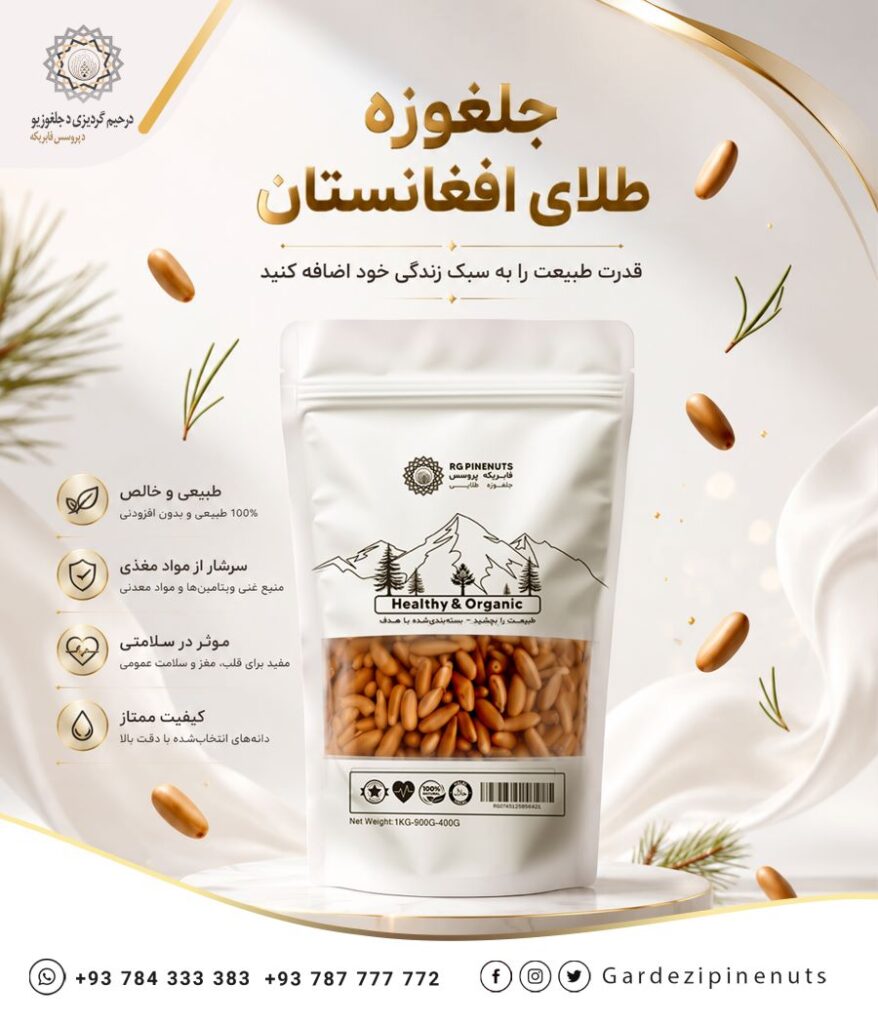
Pine nuts are edible seeds collected from the cones of selected pine species. Afghanistan is particularly associated with chilgoza, which comes from the tree scientifically known as Pinus gerardiana. The species grows across parts of the Hindu Kush and nearby mountain systems, including areas of Afghanistan and neighboring countries.
Chilgoza is valued for its distinctive shape, substantial kernel, natural oil content, and mildly sweet flavor. It may be marketed in the shell or as a cleaned, shelled kernel, depending on its intended use.
The term “pine nut of Afghanistan” generally refers to nuts harvested within Afghanistan’s pine-growing regions. Origin matters because it connects the product to a particular species, environment, harvesting tradition, and supply chain. Buyers seeking authentic Afghan pine nuts should request traceability information for the specific lot they intend to purchase.
Pine nuts are produced in several countries, but Afghan chilgoza occupies a distinctive place in the specialty-food market. Its appeal comes from a combination of sensory quality, scarcity, and geographic identity.
Fresh chilgoza kernels generally have a mild, nutty taste with a creamy or buttery character. They can be eaten alone or incorporated into recipes without overwhelming other ingredients.
Flavor depends on several factors, including:
Even high-grade kernels can develop an unpleasant flavor when exposed to heat, oxygen, moisture, or light for too long. Freshness and storage history are therefore as important as origin.
Afghan pine nuts can complement both sweet and savory foods. Their relatively soft texture allows them to work as a garnish, blended ingredient, or snack.
Common applications include:
Afghan pine nuts are closely connected with mountain forests and rural livelihoods. This background can support premium branding, provided all claims about origin, harvesting, sustainability, and community impact are accurate and verifiable.
Pine cones develop according to natural cycles, and harvest volume can change from year to year. Weather, forest health, access, labor availability, and regional logistics may all affect supply. Limited availability contributes to chilgoza’s premium market position but can also create price fluctuations.
Afghanistan’s chilgoza forests are generally associated with eastern and southeastern mountain areas. Provinces commonly linked with pine nut harvesting include Khost, Paktia, Paktika, Kunar, Nuristan, Nangarhar, and Laghman, although production and commercial availability vary.
These landscapes may feature:
The same terrain that gives the product a compelling identity can make collection and transportation difficult. Cones may need to be carried from forest areas to local drying or processing points before the seeds enter larger commercial channels.
A credible supplier should be able to identify the origin of each commercial lot rather than relying only on a general “Afghan” label.
Producing edible pine nuts involves significantly more work than simply collecting a conventional orchard crop. The trees grow slowly, cones must reach the appropriate maturity, and the edible kernels remain protected by shells until processing.
Harvesters begin by assessing whether the cones have matured sufficiently. Harvesting too early may produce underdeveloped kernels and can interfere with natural forest regeneration. Waiting too long may allow cones to open and release seeds before collection.
Depending on the location and local method, cones may be gathered from trees or collected after falling. Working on slopes or climbing trees creates safety risks, making training and appropriate equipment important.
Responsible methods should avoid unnecessary damage to:
The collected cones are dried until they open. Clean drying surfaces and protection from rain, animals, soil, smoke, chemicals, and excessive moisture are essential. Poorly managed drying can reduce quality or create food-safety risks.
After the cones open, the seeds are separated from cone fragments and other material. If shelled kernels are required, the outer shell is cracked and removed. Because kernels are relatively soft, careful equipment adjustment helps minimize breakage.
The shelled product may be cleaned and graded according to kernel size, appearance, color, defects, and broken-kernel percentage. Commercial specifications should define acceptable tolerances instead of relying on vague terms such as “premium” or “best quality.”
Customers considering Pine Nuts from Gardizi Nuts should request a current specification sheet for the product being offered. Specifications can differ by harvest, lot, processing method, and buyer requirement.
Important details may include:
Gardizi Nuts should only advertise certifications, laboratory results, organic status, food-safety systems, or sustainability credentials that can be supported by valid documentation.
Quality cannot be judged by origin alone. Buyers should inspect representative samples and compare them with the agreed written specification.
Good kernels are generally clean and reasonably uniform for their designated grade. Minor natural variation may occur, particularly in forest-derived products. Excessive discoloration, shriveling, shell fragments, or broken pieces can indicate lower grade or poor handling.
Fresh pine nuts should have a mild, pleasant aroma. Sharp, paint-like, sour, or stale odors may indicate oxidation or rancidity.
The expected flavor is delicate, nutty, and mildly sweet. Pronounced bitterness or an unpleasant aftertaste can indicate age, poor storage, or another quality problem.
The kernels should have a pleasant, slightly soft bite without feeling damp, sticky, or excessively dry. Texture varies somewhat by species and processing method.
Visual inspection is useful but cannot confirm microbiological or chemical safety. Commercial buyers may need accredited laboratory testing based on the product, destination, and legal requirements.
Like other pine nuts, Afghan chilgoza is an energy-dense food containing natural fats, plant protein, and several micronutrients. Its exact nutritional composition can vary, so packaged products should use verified data when making specific nutrition claims.
Pine nuts commonly provide:
Their fat content contributes to their rich flavor and satisfying texture. It also makes appropriate portioning and careful storage important.
Pine nuts can be incorporated into a varied diet, but they should not be promoted as preventing, treating, or curing medical conditions. Anyone with a pine nut allergy should avoid them and review food labels carefully.
The subtle flavor of chilgoza makes it adaptable to traditional Afghan meals and international recipes.
Pine nuts can be enjoyed raw or gently roasted. Since they are energy-dense, a modest serving is usually sufficient.
Pine nuts are an elegant addition to pilaf, seasoned rice, or rice served with vegetables and meat. Light toasting can enhance their aroma.
Combine pine nuts with fresh basil, garlic, olive oil, and cheese—or use a dairy-free alternative—to prepare pesto. The kernels contribute body and a creamy texture.
They pair especially well with leafy vegetables, roasted squash, citrus, pomegranate, soft cheese, and vinaigrettes.
Pine nuts can be added to cookies, cakes, bread, pastries, and fillings. Their mild flavor complements honey, dates, figs, chocolate, and warm spices.
A small amount of toasted pine nuts can add texture to pasta, soup, roasted vegetables, and grain bowls.
Toasting deepens the flavor, but pine nuts can burn quickly because they are small and naturally oily.
Do not leave toasted nuts in a hot pan, as they may continue browning after the heat is turned off.
Correct storage is essential for preserving pine nuts. Their unsaturated oils can oxidize when exposed to heat, air, and light.
Follow the storage instructions and best-before date printed on the package. Keep unopened pine nuts in a cool, dry area away from sunlight and strong odors.
Transfer opened pine nuts to an airtight food-grade container. Refrigeration is generally suitable for short- to medium-term storage.
Freezing sealed portions can help maintain quality for longer. Divide a bulk purchase into smaller packages so the full supply is not repeatedly exposed to warm air and moisture.
Discard pine nuts that develop mold, pest damage, unusual discoloration, or a distinctly rancid smell. A best-before date relates primarily to quality; it does not replace inspection or proper food-safety practices.
Gardizi Nuts may position its Afghan pine nuts for different B2B applications, subject to current capacity and product availability.
Potential customers include:
Before ordering, wholesale buyers should confirm minimum order quantity, available grade, packing options, production lead time, payment conditions, and shipping responsibility.
A buyer should request a representative sample before making a large commitment. The sample should be clearly labeled with its lot or batch information. Both parties should agree on whether it represents actual inventory or is only a general product example.
A purchase agreement should document quality tolerances. Photographs and verbal descriptions are not enough for a major commercial order.
For higher-value shipments, the contract may allow inspection by an independent organization before loading or payment. The parties should agree in advance on who selects and pays the inspector.
Exporting food requires coordination among the producer, processor, supplier, freight provider, customs agent, importer, and destination authorities. Requirements differ by country and may change.
Common commercial and regulatory documents can include:
The importer should verify current requirements with the appropriate authorities before shipment. Gardizi Nuts and the buyer should not assume that documentation accepted in one market will be sufficient in another.
Packaging must preserve quality during storage and transit. Suitable formats may include:
The chosen format should reflect order size, travel time, temperature exposure, destination rules, and expected shelf life.
Labels may need to show:
“Free design” or private-label design services should be described only if Gardizi Nuts genuinely provides them and the commercial terms are clear. Regulatory review remains essential even when design support is included.
Afghan pine nuts depend on living forest ecosystems. Long-term commercial success therefore requires more than maximizing a single harvest.
Responsible practices may include:
Buyers interested in sustainable sourcing should ask for evidence behind environmental or social claims. The words “wild,” “natural,” and “sustainable” do not automatically prove responsible forest management.
Pine nut harvesting and processing can generate income for rural communities, seasonal workers, traders, transporters, processors, and packaging businesses. However, the distribution of value depends on local purchasing systems and commercial relationships.
Potential improvements include:
Claims that a specific purchase directly benefits farmers should be supported by documented sourcing arrangements rather than used as a general marketing statement.
A complete inquiry allows the supplier to respond accurately. Buyers should provide:
Pricing may change according to harvest availability, grade, exchange rates, packaging, freight, laboratory testing, and destination requirements. A current written quotation is more useful than a general online price.
Before purchasing Pine Nuts from Gardizi Nuts, consider asking:
Clear answers reduce risk and help establish a professional relationship.
Afghan pine nuts are often called chilgoza. They generally come from Pinus gerardiana.
Yes, suitable food-grade kernels may be eaten raw. They can also be lightly toasted or incorporated into cooked dishes.
Their cost reflects slow-growing trees, limited seasonal production, difficult forest access, manual harvesting, shelling, grading, packaging, and transport.
Wholesale availability, minimum quantities, specifications, and prices should be confirmed directly with Gardizi Nuts.
Keep them sealed in cool, dry conditions. Refrigeration is useful after opening, while freezing sealed portions may support longer storage.
Some people are allergic to pine nuts. Commercial products should follow the allergen-labeling rules that apply in the destination market.
Pine Nuts from Gardizi Nuts | Pine nut of Afghanistan represents an opportunity to discover Afghan chilgoza as a specialty ingredient with distinctive flavor, versatile culinary uses, and a strong mountain origin. The product’s value, however, depends on more than its country name. Harvest maturity, processing hygiene, grading, storage, packaging, traceability, and export compliance all influence the final quality received by a customer.
Consumers should prioritize freshness and safe storage. Commercial buyers should request samples, written specifications, current documents, and clear shipping terms before ordering. When quality is verified and the supply chain is managed responsibly, Afghan pine nuts can offer meaningful value to gourmet retailers, food-service businesses, manufacturers, wholesalers, and international importers.