
Pine nut Afghanistan is a phrase many buyers, traders, and food lovers use when looking for one of the world’s most prized natural foods. Afghan pine nuts, especially the famous chilgoza variety, are known for their buttery flavor, premium quality, and strong export value. Harvested from mountain forests and traditionally collected by hand, these pine nuts are more than just a snack ingredient—they are an important part of rural livelihoods, local trade, and international food markets. If you want to understand what makes pine nut Afghanistan so special, it helps to look at where it comes from, how it is harvested, why it is expensive, and how it is used in kitchens and businesses around the world.
In this guide, we’ll explore the full story of pine nut Afghanistan, from the forest to the final buyer. You’ll learn about the growing regions, the harvest process, nutritional value, market demand, storage tips, and why Afghan pine nuts continue to attract attention from wholesalers, exporters, retailers, and gourmet food brands.
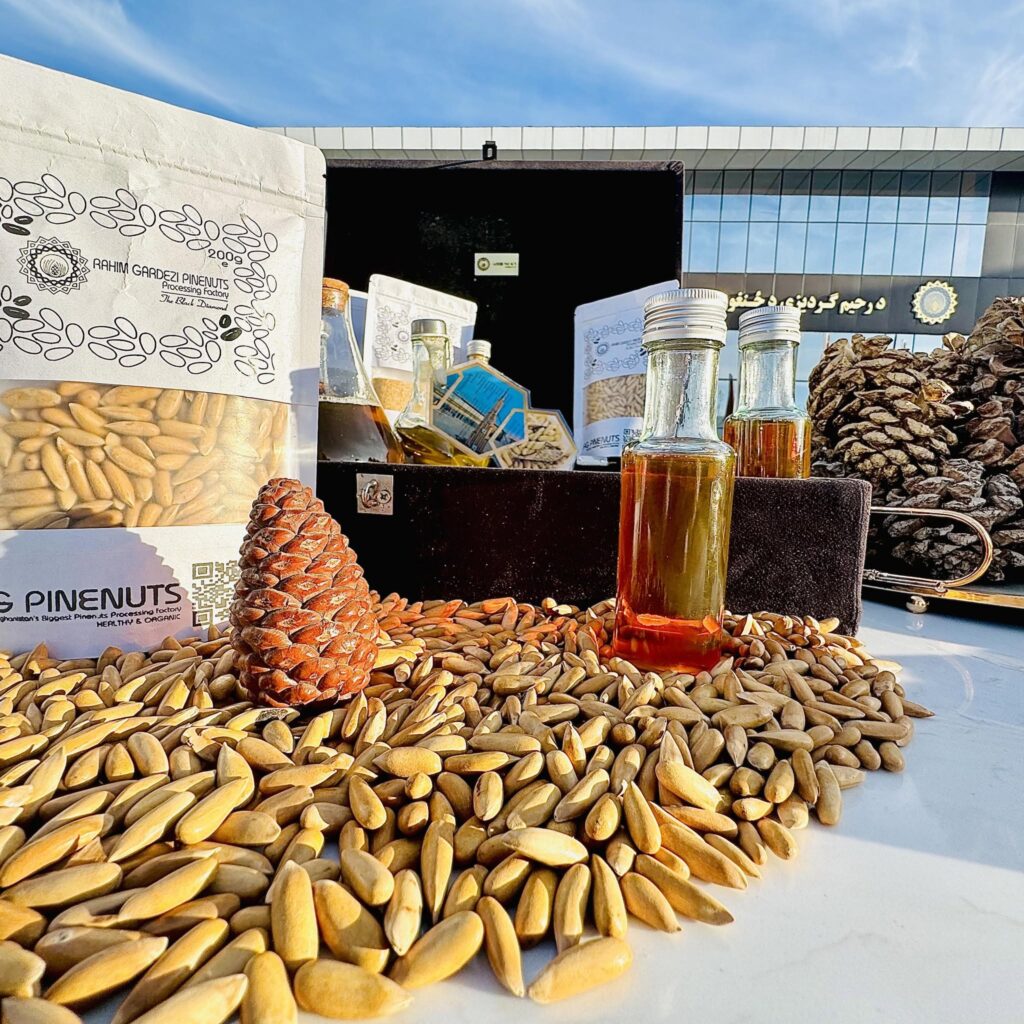
Pine nut Afghanistan generally refers to pine nuts harvested in Afghanistan, especially the premium chilgoza pine nuts that grow in the country’s mountainous forest regions. These are the edible seeds of certain pine trees. Although people commonly call them nuts, they are technically seeds found inside pine cones.
What makes pine nut Afghanistan so interesting is the combination of natural forest harvesting, premium taste, and strong market reputation. These pine nuts are often collected from wild or semi-wild trees rather than large commercial farms. That means the product is tied closely to the local landscape, climate, and traditional harvesting methods.
The best-known Afghan pine nut variety is chilgoza, which is highly valued for:
Because of these qualities, pine nut Afghanistan is often viewed as a luxury food product in both local and export markets.
Pine nut Afghanistan is mainly grown in eastern and southeastern parts of the country. The pine trees thrive in dry, rocky, mountainous terrain where the climate and elevation support natural pine forest ecosystems.
Important growing regions include:
These provinces are home to forests where chilgoza pine trees can grow and produce harvestable cones. The environment is often rugged and remote, which helps protect the forests but also makes harvesting and transport difficult.
The natural habitat contributes to the quality of pine nut Afghanistan. Because the trees grow in mountain forests rather than intensive plantations, the nuts often carry a distinct flavor and premium market identity.
There are many pine nuts in the world, but pine nut Afghanistan stands out for several reasons.
Many Afghan pine nuts are harvested from wild or semi-wild forests, not industrial farms.
They have a buttery, mild, slightly sweet flavor that is highly valued in cooking.
Buyers in regional and international markets recognize Afghan pine nuts as a premium product.
The crop is often collected using labor-intensive hand methods, which adds to its uniqueness.
Pine nut Afghanistan has become an important product in the country’s export economy.
This combination of quality, scarcity, and origin gives Afghan pine nuts a strong position in the global specialty food market.
Harvesting pine nut Afghanistan is a seasonal process that takes place in forested mountain areas. The work is physically demanding and often involves long walks, climbing, drying, and sorting.
The process usually includes:
This process requires patience and skill. Because the pine trees grow in remote terrain, the harvest is labor-intensive and time-consuming. That is one reason pine nut Afghanistan is expensive and highly valued.
One of the reasons pine nut Afghanistan is so prized is its taste. Afghan pine nuts are often described as buttery, creamy, and mildly sweet. They are soft in texture and do not have an overpowering nut flavor.
Their appearance is also part of their appeal. High-quality Afghan pine nuts are usually:
Because of their elegant flavor and delicate texture, they work well in dishes where you want a subtle but luxurious ingredient.
Pine nut Afghanistan is not only delicious—it is also nutrient-dense. Pine nuts contain a mix of healthy fats, plant protein, vitamins, minerals, and antioxidants.
Typical nutrients include:
These nutrients make pine nuts a useful ingredient in a balanced diet. They provide energy, satiety, and some important micronutrients. Because they are rich in natural oils, they are calorie-dense, so portion size matters. But when eaten in moderation, they can be a nutritious and satisfying food.
People often choose pine nut Afghanistan not just for taste, but also for its nutritional value. While pine nuts are not a miracle food, they can support a healthy diet in several ways.
Their fats are mostly unsaturated, which are often associated with heart-friendly diets.
The combination of fat, protein, and a little fiber can help make meals feel more satisfying.
Vitamin E and plant compounds help protect cells from oxidative stress.
They contain magnesium, zinc, iron, and phosphorus, which support normal body functions.
Their calorie density makes them a concentrated source of energy.
Like many nuts and seeds, pine nut Afghanistan works best as part of a balanced eating pattern.
Pine nut Afghanistan is incredibly versatile in the kitchen. Its mild, rich flavor makes it easy to use in both savory and sweet foods.
In Afghan cuisine, pine nuts may be used in festive dishes, rice recipes, and special occasions. In global cooking, they appear in Mediterranean, Middle Eastern, and gourmet recipes. A small amount can make a dish feel richer and more refined.
Pine nut Afghanistan is often expensive, and there are several reasons for that.
The nuts are collected in mountain forests by hand or with simple tools.
Pine trees do not produce massive quantities, and the harvest depends on natural conditions.
It takes time for pine trees to mature and produce harvestable cones.
The forests are often remote, which makes moving the product challenging.
Shelling, sorting, and packaging require care and labor.
The premium taste and reputation keep demand high in local and export markets.
Because of these factors, pine nut Afghanistan is typically sold as a premium product rather than a commodity food.
Pine nut Afghanistan plays an important role in the country’s export economy. International buyers often seek Afghan pine nuts because of their flavor, origin, and premium image.
The product is attractive to:
Afghan pine nuts are especially appealing in markets where consumers value natural, high-quality, specialty ingredients. With proper processing, packaging, and logistics, pine nut Afghanistan can have strong export potential.
The future of pine nut Afghanistan depends on healthy forest ecosystems. Since many of the nuts are harvested from natural forests, sustainability is critical.
A sustainable approach helps:
If the forests are damaged by fire, logging, or poor management, the supply of pine nut Afghanistan can decline. That is why forest conservation and responsible harvesting matter so much.
For many Afghan families, pine nut harvest season is a major source of income. This means pine nut Afghanistan is not just a food product—it is a livelihood resource.
Economic benefits may include:
In areas where other economic opportunities are limited, pine nut Afghanistan can be one of the most valuable forest products available.
If you are buying pine nut Afghanistan, there are a few things to check.
The best pine nut Afghanistan should smell pleasant and buttery, not stale or bitter. Since the product is premium and delicate, buying from a reliable source is important.
Because pine nuts contain natural oils, proper storage is essential.
Fresh pine nut Afghanistan should taste smooth and buttery. If it smells rancid or bitter, it may no longer be good.
Pine nut Afghanistan works well in many food traditions around the world. Its flavor is mild enough to blend into different cuisines, but rich enough to stand out.
It is commonly used in:
This versatility is part of why it continues to attract international buyers.
It refers to pine nuts harvested in Afghanistan, especially the premium chilgoza variety.
Yes, it contains healthy fats, protein, and useful minerals when eaten in moderation.
It is hard to harvest, limited in supply, and costly to process and transport.
It grows in mountainous provinces such as Khost, Paktia, Paktika, Nangarhar, Kunar, Nuristan, and Laghman.
You can eat it raw, toasted, or use it in salads, pesto, pasta, rice dishes, and desserts.
Pine nut Afghanistan is one of the country’s most valuable natural foods. It combines rich flavor, premium quality, and strong export potential, while also supporting rural livelihoods and forest-based economies. From the mountain forests where it grows to the kitchens and markets where it is sold, pine nut Afghanistan carries a story of tradition, labor, and value.
For buyers, it offers a distinctive ingredient with wide culinary use. For exporters and wholesalers, it represents a high-value product with strong demand. And for the communities that harvest it, pine nut Afghanistan is an important seasonal income source.
If you are looking for a premium pine nut product with a strong natural origin and exceptional taste, pine nut Afghanistan is one of the most interesting and valuable options in the world of dry fruits and specialty foods.