
Importing pine nuts in bulk requires more than finding a supplier with competitive pricing. International buyers need consistent product quality, dependable volumes, suitable packaging, careful handling, traceability, export documentation, and a supply partner capable of meeting their specifications.
A bulk pine nut exporter for importers should therefore provide a complete B2B sourcing solution—from product selection and processing to quality control, packaging, documentation, and international shipment preparation.
For importers, wholesalers, distributors, food manufacturers, retailers, restaurants, hotels, and catering companies, bulk pine nuts can be sourced in different formats, including whole pine nuts, shelled kernels, in-shell pine nuts, graded kernels, and value-added products such as pine nut oil and pine nut butter.
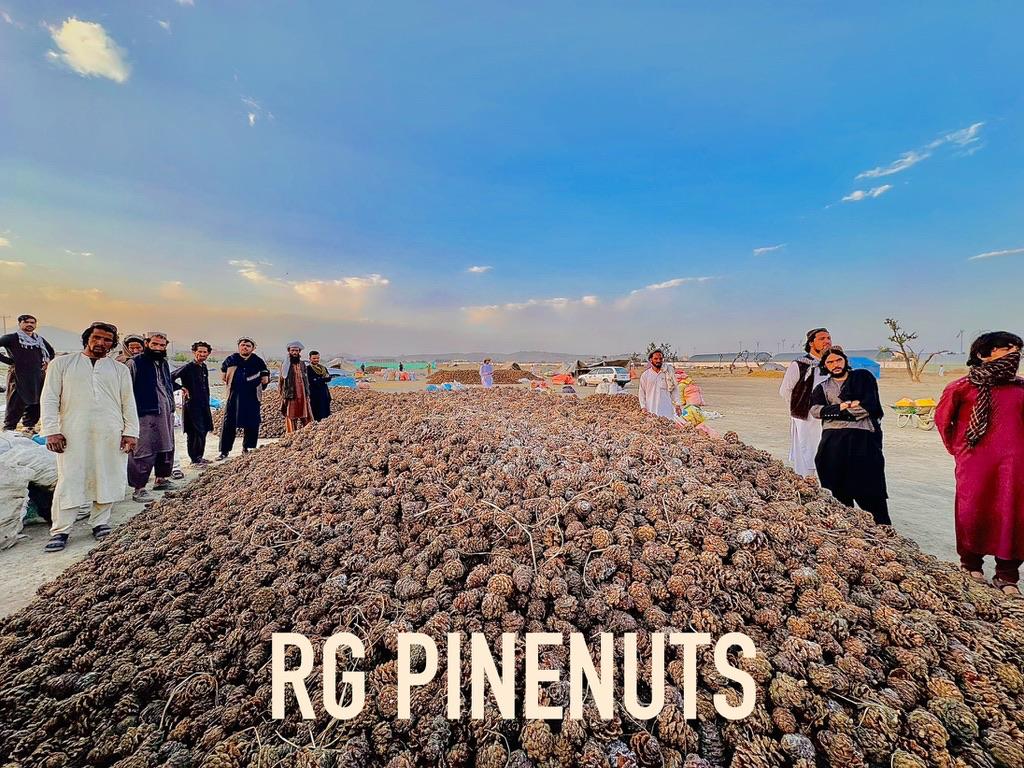
A bulk pine nut exporter supplies pine nuts in commercial quantities to buyers in international markets.
Unlike a small retail supplier, an export-oriented supplier must understand the requirements of international B2B transactions. These can include:
For importers, the objective is not simply to purchase the lowest-cost pine nuts. The objective is to establish a supply chain that delivers the required product specification consistently from origin to destination.
Pine nuts are traded internationally as premium food ingredients, snack products, bakery ingredients, confectionery components, salad toppings, culinary ingredients, and raw materials for food manufacturing.
Chilgoza pine nuts, associated with Pinus gerardiana, have long been traded in Afghanistan, Pakistan, India, and Middle Eastern markets. FAO describes Chalghoza pine kernels as an important non-wood forest product used as food and traded internationally.
For an importer, sourcing directly from an export-capable supplier can create advantages in product customization, communication, origin visibility, bulk purchasing, and supply planning.
Bulk purchasing can be suitable for businesses that need regular commercial quantities rather than consumer-sized packages.
Typical buyers include:
Importers may purchase bulk pine nuts for resale to wholesalers, supermarkets, specialty-food retailers, restaurants, hotels, or food manufacturers.
Pine nuts are used in products such as:
Professional kitchens may require consistent pine nut specifications for Mediterranean, Middle Eastern, Asian, and international cuisine.
Importers may also purchase bulk kernels and subsequently pack them under their own retail brand, subject to applicable labeling, food-safety, and packaging requirements in the destination market.
A professional exporter should be able to discuss different product formats rather than offering only one generic product.
Shelled pine nut kernels are particularly useful for food manufacturers, restaurants, wholesalers, and retailers because they are ready for direct culinary or further processing applications.
Buyers may specify:
Whole pine nuts can be supplied for roasting, further processing, retail packing, or other commercial applications.
In-shell products can be relevant for specific markets and processing operations where buyers prefer to perform shelling or additional processing themselves.
Golden-colored kernels may be positioned for premium food applications where visual appearance is an important purchasing criterion.
Pine nut oil is a value-added product that can serve specialty food, culinary, cosmetic, or ingredient applications depending on its specification and applicable regulations.
Pine nut butter provides another value-added format for specialty-food and ingredient markets.
Choosing an exporter should involve more than comparing quotations.
A professional importer should evaluate several dimensions simultaneously.
A supplier should be able to communicate clear specifications and demonstrate how consistency is maintained between batches.
Important questions include:
Commercial pine nuts may require cleaning, shelling, sorting, grading, inspection, and appropriate storage before export.
Processing technology is increasingly important in the nut industry. Recent research has explored non-destructive detection systems for pine nuts that can identify deterioration associated with acidification and oxidation without relying solely on destructive testing.
For exporters, this points toward a broader industry movement: combining conventional quality-control procedures with increasingly sophisticated inspection and detection technologies.
Moisture is an important consideration when storing and transporting nuts.
Excess moisture can affect texture, stability, microbial risk, and shelf life, while inappropriate storage conditions can accelerate quality deterioration.
Research on tree nuts shows that storage temperature, moisture, oxygen exposure, packaging, harvest conditions, and processing can all influence shelf life and oxidative stability.
For this reason, importers should ask exporters about:
A strong export program should use multiple quality-control checkpoints.
Incoming pine nuts should be assessed for characteristics such as:
Cleaning and sorting help remove unwanted material and separate product according to defined specifications.
Depending on the facility, technologies may include mechanical sorting, optical inspection, size grading, and manual quality checks.
When shelled kernels are required, shelling should minimize unnecessary kernel breakage and physical damage.
Grading can help exporters prepare product according to buyer requirements for size, appearance, and other commercial characteristics.
Before shipment, the finished product should be checked against the agreed purchase specification.
For an importer, this is important because the product received at destination should correspond as closely as possible to the product specified in the purchase contract.
Pine nuts are lipid-rich foods, making oxidation an important consideration during storage and transportation.
A 2025 review of nut oxidation identified species, variety, oil composition, fatty acids, harvest conditions, mechanical damage, processing, packaging, and storage as important factors influencing oxidative stability. The review also highlighted smart packaging and multidisciplinary approaches as areas of continuing development.
This means an importer should not evaluate packaging simply by asking whether a product is “sealed.”
The more useful questions are:
The right packaging depends on product type, shipment size, destination, expected storage period, handling conditions, and buyer requirements.
Potential commercial packaging approaches include:
Recent research in nut storage supports the importance of controlling oxygen, temperature, and packaging conditions. Studies on other high-oil nuts have shown that modified-atmosphere and low-temperature storage can reduce oxidation and preserve quality over extended storage periods.
Research published in 2026 has also investigated active antioxidant packaging specifically using Chilgoza pine nut shell extract. In that study, the experimental packaging reduced oxidation markers in pine nuts and demonstrated potential for extending shelf life. This is an emerging research direction rather than a universal commercial packaging standard, but it illustrates the innovation occurring around pine nut preservation.
Bulk pine nuts should be protected from conditions that can accelerate deterioration.
An export-oriented storage program should consider:
For importers, storage conditions should be discussed before the purchase agreement is finalized—not after the cargo arrives.
Traceability allows buyers to connect a finished shipment with relevant information about its origin, processing, batch, packaging, and shipment.
A robust traceability system can support:
Origin → Raw Material → Processing → Sorting → Quality Control → Packaging → Batch → Shipment
For international buyers, this can simplify quality investigations and improve supply-chain visibility.
FAO’s recent reporting on Afghanistan’s pine nut sector illustrates the growing emphasis on processing, sorting, packaging, and access to international markets. At Afghanistan’s first International Agro Expo in 2026, one Afghan business secured an agreement to supply 12 tonnes of pine nut kernels to a buyer in Türkiye, while planning investment in equipment for cleaning, sorting, processing, and packaging.
Afghanistan is an important origin for Chilgoza pine nuts, and the product has established cultural and commercial relevance in Afghanistan and surrounding markets.
For international importers considering Afghan pine nuts, origin is only one part of the sourcing decision. Buyers should also evaluate:
The opportunity for Afghan pine nuts in international markets is therefore closely connected to improvements in post-harvest handling, professional processing, packaging, quality control, and market access.
Before requesting a quotation, buyers can prepare a clear product specification.
A useful specification may include:
| Specification | Buyer Requirement |
|---|---|
| Product | Pine nut / pine nut kernel |
| Origin | Required origin |
| Species | Required species, where relevant |
| Form | Whole / shelled / in-shell |
| Grade | Buyer-defined grade |
| Size | Buyer-defined size |
| Color | Buyer-defined specification |
| Moisture | Agreed specification |
| Packaging | Bulk / vacuum / MAP / custom |
| Quantity | Required shipment volume |
| Labeling | Destination-market requirements |
| Documentation | Agreed export/import documents |
| Delivery | Required destination and schedule |
The more precise the specification, the easier it becomes for an exporter to provide an accurate quotation.
There is no single international price for bulk pine nuts.
The final commercial price can vary according to:
For importers, the relevant metric is often landed cost, rather than the supplier’s quoted product price alone.
A lower product quotation may not produce a lower landed cost if packaging, freight, losses, quality problems, delays, or additional processing create downstream expenses.
Before entering a long-term supply agreement, importers can use the following checklist.
Product
Quality
Processing
Packaging
Traceability
Export
Communication
Direct relationships between importers and exporters can create a more transparent purchasing process.
Potential benefits include:
However, direct sourcing works best when both parties establish clear specifications, contracts, inspection procedures, payment terms, and responsibilities before shipment.
Food manufacturers often have requirements that differ from retail buyers.
A manufacturer may prioritize:
For these buyers, supplier consistency can be as important as the initial purchase price.
A supplier that can maintain the same specification across multiple shipments may provide greater operational predictability for manufacturers.
Wholesalers and distributors typically need products that can move efficiently through several stages of the supply chain.
Important considerations include:
A professional exporter should be able to discuss these requirements before the buyer places a commercial order.
The pine nut industry is increasingly benefiting from developments in food inspection, processing, packaging, and storage.
Recent research has explored artificial-intelligence-assisted and multimodal imaging approaches for non-destructive pine nut quality detection. Such systems are being investigated for identifying deterioration and oxidation-related characteristics without destroying the sample.
Researchers are also exploring active packaging technologies designed to limit oxidation and extend the shelf life of lipid-rich foods. In 2026, a study using Chilgoza pine nut shell extract demonstrated antioxidant packaging effects on pine nuts under experimental conditions.
Digital batch records, barcode systems, warehouse management, and supply-chain documentation can make it easier to track products from processing through shipment.
The broader food industry is moving toward combining conventional laboratory testing with non-destructive sensing and data analysis.
For exporters and importers, these technologies can eventually support faster inspection, better consistency, and improved supply-chain visibility.
Responsible sourcing is increasingly relevant to international food buyers.
Sustainable sourcing can involve:
Pine nut shells, for example, are being studied as potential sources of useful bioactive compounds and packaging materials rather than being treated only as waste. The 2026 active-packaging research using Chilgoza pine nut shells is one example of this emerging circular-economy direction.
A reliable export workflow can be structured around the following stages:
1. Buyer Inquiry
The importer provides product, quantity, specification, destination, and packaging requirements.
2. Product Specification
Exporter and importer agree on the exact product specification.
3. Sample Evaluation
Where appropriate, the buyer evaluates representative samples before confirming the order.
4. Commercial Agreement
Price, quantity, packaging, payment terms, delivery terms, inspection requirements, and documentation are agreed.
5. Processing
The pine nuts undergo the required cleaning, shelling, sorting, grading, and quality-control procedures.
6. Packaging
The product is packed according to the agreed commercial specification.
7. Final Quality Control
The shipment is checked against the agreed requirements.
8. Documentation
Required export and shipment documentation is prepared.
9. Shipment
The cargo is prepared for international transportation.
10. Import and Delivery
The importer receives the shipment and manages destination-country customs, regulatory, and distribution requirements.
For importers seeking Afghan pine nuts, the supplier’s ability to combine origin with professional export operations is critical.
A suitable export partner should be able to demonstrate more than access to raw pine nuts. Buyers should look for evidence of:
The combination of origin knowledge and export capability can be particularly important when purchasing premium products for international markets.
If you are an importer looking to purchase pine nuts in commercial quantities, provide your requirements as clearly as possible.
A useful inquiry should include:
A detailed inquiry enables an exporter to prepare a more relevant commercial proposal.
A bulk pine nut exporter supplies pine nuts in commercial quantities to international buyers such as importers, wholesalers, distributors, retailers, restaurants, and food manufacturers.
Yes. Pine nut kernels are commonly relevant to commercial food applications, including restaurants, food manufacturing, bakery, confectionery, specialty foods, and wholesale distribution.
Importers should evaluate origin, species where relevant, product grade, size, moisture, quality controls, packaging, storage, traceability, documentation, shipping terms, and supplier reliability.
Packaging depends on the product, quantity, destination, storage period, and buyer specification. Vacuum, high-barrier, and modified-atmosphere packaging can be considered where appropriate because oxygen and temperature are important factors in nut oxidation and shelf life.
Afghan pine nuts, particularly Chilgoza pine nuts, are traded internationally. Recent FAO reporting also documents an Afghan company securing a 12-tonne pine nut kernel supply agreement with a buyer in Türkiye in 2026.
Price can depend on origin, harvest, grade, kernel size, availability, processing, packaging, quantity, logistics, destination, and other commercial terms.
Depending on the supplier’s capabilities, buyers may request customized bulk, vacuum, foodservice, retail, or private-label packaging. Requirements should be agreed before production and shipment.
Start with a clear specification, sample evaluation, documented quality requirements, agreed commercial terms, inspection procedures, packaging specifications, delivery schedule, and traceability requirements. Successful repeat orders can then be based on the same documented specifications.
A bulk pine nut exporter for importers should be more than a source of bulk product. International buyers need a supply partner capable of connecting origin, processing, quality control, packaging, storage, documentation, and logistics into one dependable export workflow.
For importers, the strongest sourcing strategy is to evaluate the entire supply chain rather than comparing price alone. Product specifications, consistency, oxidation management, packaging, traceability, processing technology, and export capability can all influence the commercial value of a shipment.
As pine nut processing continues to adopt improved inspection, non-destructive quality detection, advanced packaging, and traceability technologies, exporters that combine product knowledge with professional supply-chain management can provide greater value to international buyers.
For businesses seeking bulk pine nuts for import, wholesale distribution, food manufacturing, hospitality, or retail, the next step is to define the required product specification and request a detailed export quotation based on quantity, destination, packaging, quality requirements, and delivery terms.