
Are you looking for a reliable Afghan pine nut oil exporter to supply premium pine nut oil for international markets? RG Pinenuts specializes in Afghan pine nut products, with a focus on quality, careful processing, and trusted origin. For importers, distributors, specialty food brands, restaurants, and food manufacturers, Afghan pine nut oil offers an opportunity to explore a distinctive ingredient derived from Afghanistan’s valuable pine nut resources.
Pine nut oil is appreciated for its characteristic nutty flavor, distinctive fatty-acid profile, and potential applications in culinary products and specialty food formulations. However, selecting the right product requires more than evaluating its origin or appearance. Buyers should also consider the botanical source, extraction method, chemical quality, oxidation stability, packaging, traceability, and export documentation.
At RG Pinenuts, our broader product portfolio includes Golden Pine Nuts, Pine Nut Kernels, Pine Nut Oil, and Pine Nut Butter. We aim to connect Afghan pine nut products with international buyers who value quality, transparency, and dependable business relationships.
Whether you are exploring bulk pine nut oil, developing a premium culinary product, or evaluating an Afghan supplier for long-term cooperation, this guide explains what international buyers should know before sourcing pine nut oil from Afghanistan.
Looking for a pine nut oil supplier? Contact RG Pinenuts to discuss your intended application, required quantity, packaging preferences, destination market, and product specifications.
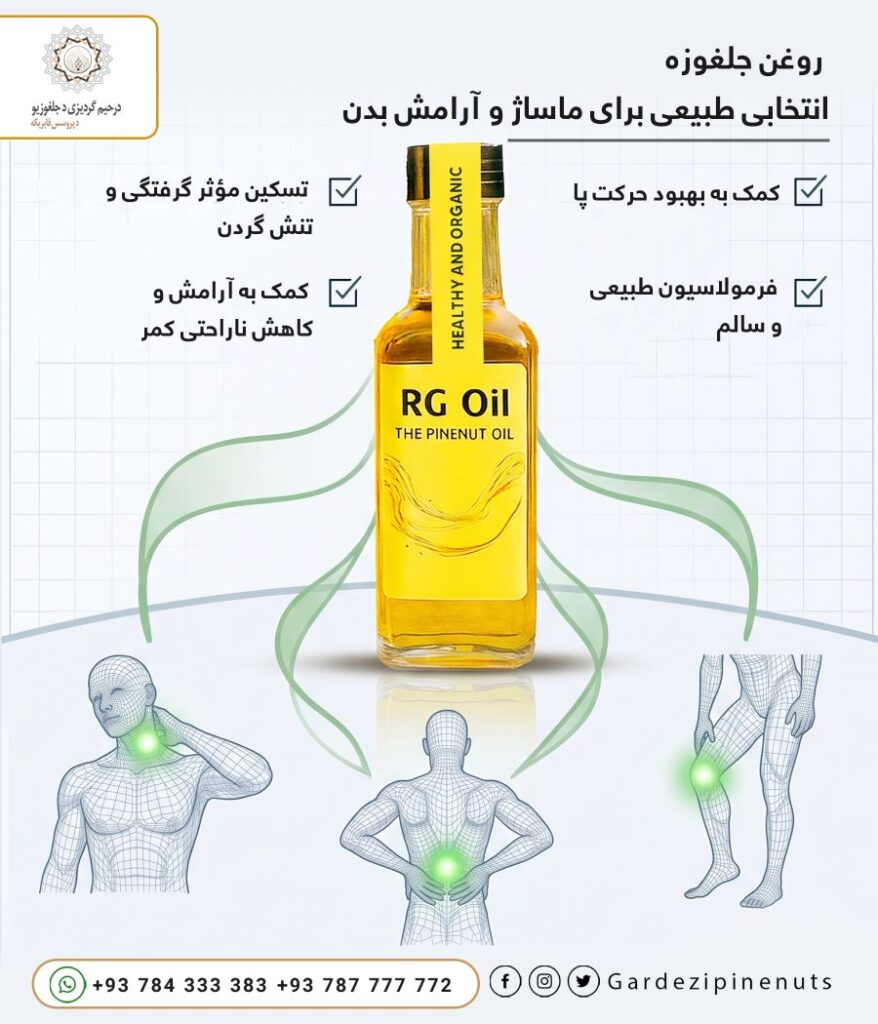
Afghan pine nut oil is oil obtained from pine nuts harvested in Afghanistan. One important Afghan pine nut is Chilgoza, botanically known as Pinus gerardiana. This species is associated with the mountainous regions of Afghanistan and neighboring parts of South Asia.
The precise botanical identity of the raw material matters because pine nuts from different Pinus species do not necessarily have identical fatty-acid profiles, flavor characteristics, or processing behavior. A buyer evaluating Afghan pine nut oil should therefore ask the supplier to identify the raw material used and, where necessary, provide supporting product or laboratory documentation.
Pine nut oil contains a mixture of fatty acids, including unsaturated fatty acids. Its exact composition depends on factors such as species, geographical origin, growing conditions, harvesting, processing, and storage.
Research on pine nut oil has attracted attention because some pine species contain pinolenic acid, a fatty acid that is less common in many other edible oils. Nevertheless, the concentration of pinolenic acid varies among pine species and products. It should not be assumed that every pine nut oil has the same composition.
A 2025 scientific review examined pine nut oil extraction, oxidative stability, storage, and emerging protection technologies. The review highlights both the value of the oil’s unsaturated fats and the importance of controlling oxidation throughout processing and storage.
For commercial buyers, the practical lesson is clear: origin, botanical identity, extraction, verified quality, and storage conditions should be evaluated together.
Selecting an Afghan pine nut oil exporter can help international buyers explore products connected to Afghanistan’s pine nut supply chain. However, a supplier’s suitability should be established through transparent product information and evidence of its ability to meet the buyer’s requirements.
Afghan Chilgoza pine nuts have a distinctive place in the regional nut trade. Their origin can be an important element of a product’s identity, particularly for specialty food companies seeking ingredients with a clear geographical story.
For importers and food brands, origin information can support product differentiation when it is accurate, documented, and consistent with applicable labeling requirements.
An exporter should be able to explain the origin of its raw material and describe the traceability information available for each shipment. Buyers developing origin-focused products should confirm which claims can be substantiated before printing them on packaging or marketing materials.
Pine nut oil can be considered for selected culinary and specialty food applications, depending on its grade, sensory profile, stability, and regulatory suitability.
Potential commercial applications include:
Not every pine nut oil is suitable for every application. A manufacturer developing a commercial recipe should evaluate flavor, processing compatibility, stability, and finished-product performance before committing to large-volume purchases.
Working directly with an exporter can give buyers an opportunity to discuss raw-material origin, available quantities, product specifications, packaging, and shipment requirements.
For importers, clear communication is particularly important when the product is a specialty oil rather than a widely standardized commodity.
Before placing an order, buyers should request written confirmation of the product identity, grade, extraction method, packaging format, minimum order quantity, production lead time, and documentation available for export.
Food distributors and manufacturers often need suppliers that can communicate consistently and support repeat purchasing.
A useful supplier relationship should include clear specifications, realistic lead times, transparent quotation terms, agreed sampling procedures, and a defined process for handling quality concerns.
RG Pinenuts welcomes inquiries from businesses interested in Afghan pine nut products and international sourcing opportunities. Specific quantities, shipment schedules, certifications, and packaging arrangements should be confirmed directly for each order.
RG Pinenuts was founded in 2021 in Afghanistan and specializes in supplying high-quality pine nut products. The brand’s stated priorities include quality, hygiene, innovation, and trust.
Our product portfolio includes:
Our brand positioning is built around Afghan origin and carefully processed pine nut products: RG Pinenuts — Pure Quality. Trusted Origin.
For international buyers, the next step is to establish whether the available product meets the required specification. Product availability, oil grade, extraction method, laboratory results, packaging formats, and export arrangements should be confirmed for the specific order.
We encourage buyers to share their intended use and destination market so that the inquiry can focus on the relevant product and commercial requirements.
Understanding the composition of pine nut oil helps buyers make informed decisions about product suitability, labeling, formulation, and quality control.
Pine nut oil contains unsaturated fatty acids, including monounsaturated and polyunsaturated fatty acids. Their relative proportions depend on the botanical source and the conditions under which the nuts are grown, processed, and stored.
Linoleic acid is a polyunsaturated fatty acid found in many edible oils. Oleic acid is a monounsaturated fatty acid also present in numerous plant oils. Pine nut oil may contain other fatty acids in smaller proportions.
Published research on one pine species should not automatically be treated as a specification for Afghan Chilgoza oil. Buyers who require a particular fatty-acid profile should request an analysis of the actual product or representative batch.
Pinolenic acid is a fatty acid that has received research attention in connection with pine nut oil. Its concentration varies by species and source, so claims about its presence or quantity should be supported by relevant analytical evidence.
A scientific review published in 2021 discussed the potential biological effects of pine nut oil, pinolenic acid, and related fatty acids. The authors also identified a need for additional human research before firm health conclusions can be drawn.
For commercial product development, pinolenic acid may be relevant when a buyer is investigating a specific composition or research-led positioning. However, it should not be used as a substitute for full product testing, and it does not automatically establish that a particular oil is superior to other oils.
Agricultural ingredients can vary from batch to batch. Differences may arise from raw-material origin, maturity, storage history, processing parameters, and the conditions used to extract the oil.
A supplier should therefore avoid treating general literature values as guaranteed product specifications.
For buyers who require consistent formulation performance, the preferred approach is to establish a written specification and verify representative batches through appropriate testing.
The extraction method affects the oil’s sensory characteristics, yield, composition, and potential stability. Buyers evaluating an Afghan pine nut oil exporter should ask how the oil is produced and whether the method suits their application.
Mechanical pressing uses equipment to apply pressure to prepared pine nuts or kernels and separate the oil from the solid material.
The resulting oil depends on several factors, including raw-material condition, moisture, equipment settings, temperature, and handling after extraction.
Mechanical pressing may be attractive to buyers who prefer an extraction process that does not rely on solvent extraction. However, the phrase “mechanically pressed” alone does not guarantee a specific fatty-acid composition, shelf life, or sensory quality.
Cold pressing generally refers to an extraction process in which temperature is controlled according to the applicable definition or standard.
Buyers should ask the supplier what temperature limits and processing conditions are used and how the claim is substantiated. Definitions and labeling requirements may differ by market.
Cold-pressed oil may be suitable for some premium culinary applications where the buyer values a particular flavor profile or processing approach. The final product still needs appropriate testing and storage controls.
It is important not to assume that cold-pressed oil is automatically more stable than oil produced through another method. Oxidation stability depends on multiple factors, including fatty-acid composition, minor compounds, processing, oxygen exposure, light, and temperature.
Solvent extraction uses a suitable solvent to recover oil from raw material. It may be used where extraction yield and process economics are important, but the method requires appropriate controls, including solvent recovery and verification of residual solvent levels where applicable.
The suitability of this method depends on the intended product, applicable food regulations, and the buyer’s specification.
Food manufacturers should establish whether the resulting oil meets the requirements for their intended application, including any restrictions related to processing methods or labeling.
Supercritical carbon dioxide extraction uses carbon dioxide under controlled pressure and temperature to extract selected compounds from raw material.
This method has attracted interest because it can reduce reliance on conventional organic solvents in certain processes. Its practical suitability depends on equipment, operating parameters, extraction targets, cost, and production scale.
It should not be assumed that every pine nut oil exporter uses this technology. Buyers interested in it should confirm the actual extraction method rather than infer it from general industry research.
Research has also explored ultrasound-assisted and microwave-assisted extraction as ways to improve extraction efficiency or modify processing conditions.
A 2025 review describes these technologies alongside other approaches to improving pine nut oil processing and stability. It also emphasizes that extraction efficiency must be balanced against oxidation control and product quality.
For commercial procurement, the key question is not whether a method sounds advanced. It is whether the supplier can demonstrate that the resulting oil meets the required product specification, safety criteria, and intended-use requirements.
Quality control is central to the successful export of edible oils. A product may have an appealing appearance and aroma yet still require laboratory testing to verify its composition, freshness, and suitability.
International buyers should consider the following quality parameters when evaluating a pine nut oil supplier.
Fatty-acid analysis can help characterize the oil and support product identity. It may also help buyers assess whether a product is consistent with an agreed specification.
The method and reporting format should be appropriate for the intended purpose. Where botanical identity or authenticity is a concern, the results should be interpreted by a qualified laboratory or food science professional.
Free fatty acids and acid value can provide information about hydrolytic deterioration and the condition of the oil.
The appropriate limit depends on the product specification, applicable standards, and intended use. Buyers should agree on the reporting method and acceptance criteria before shipment.
Peroxide value is commonly used to assess primary oxidation products in edible oils.
It is a useful quality indicator, but it does not provide a complete picture of oxidation by itself. A low peroxide value should not be treated as conclusive proof of freshness without considering the broader analytical and storage context.
Secondary oxidation tests can provide additional information about degradation that may not be apparent from peroxide value alone.
Depending on the product and laboratory protocol, relevant tests may include p-anisidine value, oxidation-related volatile compounds, or other validated indicators.
A suitable testing plan should reflect the buyer’s risk assessment, product grade, shelf-life expectations, and destination-market requirements.
Moisture control matters during raw-material storage and processing because poor handling can increase deterioration risks. The relevant testing plan may also include contaminants, pesticide residues, heavy metals, microbiological parameters, or other hazards depending on the source, processing conditions, and regulatory requirements.
Not every test is necessary for every transaction. Buyers and suppliers should determine the applicable panel using the intended application and destination-market rules.
Sensory assessment can help identify undesirable odors, unusual flavor, rancidity, or other characteristics that may affect consumer acceptance.
Sensory evaluation should complement rather than replace laboratory testing. A product that smells acceptable is not automatically compliant with all chemical or food-safety requirements.
A useful quality system links the product to its batch, raw-material source, production date or code, testing records, packaging information, and shipment documentation.
For importers and manufacturers, this information supports incoming-goods checks, traceability, stock rotation, and investigation of any future quality concerns.
Buyer recommendation: Before committing to a large shipment, request the available product specification and a recent certificate of analysis for the relevant product or representative batch. Agree on the acceptance criteria in writing.
Pine nut oil contains unsaturated fats, which can make oxidation management especially important. Oxidation may gradually change the oil’s aroma, flavor, color, and chemical characteristics.
The rate of deterioration depends on the oil’s composition, the condition of the raw material, extraction conditions, oxygen exposure, light, temperature, packaging, and storage duration.
A 2025 review specifically identifies oxidative stability as a central challenge for pine nut oil and discusses approaches involving processing optimization, reduced oxygen exposure, light protection, and temperature control.
For an exporter, this means quality management should extend beyond extraction. Packaging, storage, handling, and shipment planning are all important parts of the product’s journey.
A practical quality strategy may include:
The exact controls should be based on the product and validated process rather than generic assumptions.
Shelf life should not be assigned solely because a similar product has a certain expiration period.
A defensible shelf-life claim should consider product composition, extraction, packaging, storage conditions, relevant laboratory indicators, and appropriate stability evidence.
For buyers purchasing pine nut oil in bulk, it is useful to ask how the supplier establishes the best-before date and which storage conditions are required after receipt.
Packaging protects the product during storage, handling, transportation, and retail distribution. It can also influence the buyer’s operating costs and the product’s suitability for a particular channel.
Packaging should be appropriate for edible oil, compatible with the product, and compliant with the destination market’s food-contact requirements.
Depending on the buyer’s needs, packaging options may include bottles, tins, drums, or other suitable containers. Actual availability should be confirmed with the supplier.
Light can contribute to oil deterioration under certain conditions. Packaging that limits light exposure may be appropriate, particularly where the product is sensitive to light and distribution conditions are challenging.
The best format depends on the product, storage environment, sales channel, and validated shelf-life expectations.
Reducing oxygen exposure is a key consideration for oxidation-sensitive oils. Suitable closures, barrier materials, controlled headspace, and packaging processes may help reduce deterioration risk.
Vacuum packaging or nitrogen flushing may be considered where technically appropriate. These options should be verified for the specific product and packaging line rather than promised as standard features without confirmation.
Different buyers need different formats.
Packaging dimensions, fill volumes, case configuration, minimum order quantities, and labeling arrangements should be confirmed during quotation.
Packaging development increasingly considers material use, recyclability, product protection, and transport efficiency.
However, a packaging material should not be described as environmentally superior without suitable evidence. The environmental impact depends on material sourcing, manufacturing, recycling infrastructure, transport, and the ability to prevent product waste.
For commercial buyers, the goal is to identify a packaging format that protects the oil, meets legal requirements, supports the intended channel, and aligns with the buyer’s sustainability criteria.
Research into pine nut oil continues to investigate ways to improve extraction, preserve quality, understand composition, and expand applications.
For buyers, these developments are useful context. They do not mean that every technology is already commercially available or used by every exporter.
Researchers have explored mechanical, solvent-based, supercritical-fluid, ultrasound-assisted, and microwave-assisted approaches.
Each technique involves trade-offs between yield, equipment requirements, processing conditions, cost, and product quality. A method that works well for one pine species or laboratory sample may not deliver identical results for Afghan Chilgoza pine nuts at industrial scale.
Commercial decisions should therefore be supported by product-specific trials and verified specifications.
Traditional oxidation tests remain important, while researchers are investigating broader analytical methods to understand oil deterioration.
More detailed chemical analysis can help characterize oxidation pathways and identify changes that may not be captured by one measurement alone.
For suppliers and buyers, the practical benefit of a good testing strategy is improved visibility into product condition and a clearer basis for setting acceptance limits and shelf-life expectations.
Lipidomics uses analytical techniques to study a wide range of lipid molecules within a sample.
Research using detailed lipid profiling may help scientists distinguish samples, investigate composition, and better understand changes during processing and storage.
These methods can be valuable in research and specialized quality investigations. They should not be represented as routine exporter capabilities unless the supplier actually uses them.
Microencapsulation encloses oil in a protective material to create a formulation that may improve handling or protect sensitive components.
It has potential applications in food formulation, including products where liquid oil is difficult to incorporate directly. However, encapsulated pine nut oil is a different format from conventional bottled culinary oil and may require different processing, labeling, and storage considerations.
Pickering emulsions and oleogels are among the formulation approaches discussed in recent research on oil stability and food applications.
These technologies may help researchers develop new textures or delivery formats. Their commercial suitability depends on performance, ingredient compatibility, safety assessment, manufacturing cost, and regulatory compliance.
The 2025 review identifies these technologies as promising research directions while noting that practical implementation still faces challenges.
Developments in barrier materials, oxygen management, packaging design, and storage monitoring may help protect oxidation-sensitive oils.
For export supply chains, packaging must also withstand normal transport and handling conditions. Buyers should assess the whole system—from filling and sealing to warehousing and final distribution—rather than looking at the package material in isolation.
Digital batch records and traceability systems can help connect raw materials, processing, testing, packaging, and shipment information.
Where implemented, these systems can support faster document retrieval and more consistent communication between suppliers and buyers. The value depends on the accuracy and completeness of the underlying records.
The commercial priority remains evidence: technology matters when it demonstrably supports product identity, quality, safety, consistency, or supply-chain performance.
Pine nut oil may be suitable for selected culinary applications depending on its sensory profile, grade, and stability. Before adopting it in a commercial recipe, food businesses should evaluate the actual product through samples and controlled trials.
A distinctive nutty oil may be considered for dressings, finishing applications, and selected cold preparations where its flavor complements the other ingredients.
Recipe developers should assess flavor intensity, compatibility with acids and seasonings, and performance over the intended storage period.
Pine nut oil may be investigated in specialty sauces or pesto-style formulations. However, the final flavor and texture depend on the entire recipe, not just the oil.
Manufacturers should test mixing behavior, sensory acceptance, oxidation stability, and the finished product’s shelf life.
Premium oils may be used in selected gourmet foods, gift assortments, specialty retail, and restaurant menus.
A product’s premium positioning should be supported by genuine characteristics, verified origin, appropriate packaging, and transparent product information.
Manufacturers considering pine nut oil should assess the oil’s functionality within their specific process. Factors may include flavor, processing temperature, compatibility with other ingredients, finished-product stability, and cost.
An oil suitable for a cold dressing may not be the best choice for a high-temperature process. Application testing is therefore essential.
International importers often evaluate specialty oils based on more than the unit price. The supplier’s documentation, packaging, quality consistency, order size, shipping arrangements, and responsiveness all influence the commercial decision.
RG Pinenuts welcomes inquiries from businesses interested in sourcing Afghan pine nut products. Buyers evaluating pine nut oil should provide enough information to determine whether the available product and export arrangements fit their requirements.
Potential business customers include:
These categories describe potential buyer segments, not confirmation that every product format, certification, or volume is currently available.
To make supplier evaluation more efficient, include the following details in your inquiry:
Providing these details helps establish whether the product and proposed shipment are suitable before commercial terms are finalized.
A sample can help a buyer evaluate sensory characteristics, packaging, and suitability for a proposed application. However, a sample is not a substitute for an agreed commercial specification or the documentation required for a full shipment.
For a larger order, buyers should define the approval process in advance, including how samples relate to production batches and which tests or documents must accompany the shipment.
Some buyers prefer to market a product under their own brand. Private-label arrangements may involve label design, packaging selection, product information, language requirements, and regulatory review.
Availability depends on supplier capabilities, minimum quantities, and destination-market rules. Buyers should confirm these details before assuming that private-label production is available.
Exporting edible oil requires attention to the rules of both the exporting and importing countries. Requirements vary by destination, product classification, processing method, packaging, and intended use.
Depending on the transaction, documents may include a commercial invoice, packing list, transport documentation, certificate of origin, applicable export declarations, and product-specific food-safety or health documentation.
Not every document applies to every shipment. The exact requirements should be confirmed with the relevant authorities, customs broker, importer, and logistics provider.
Importers may need a product specification, certificate of analysis, ingredient statement, batch identification, shelf-life information, and storage instructions.
Additional documentation may be required by the destination market or the buyer’s quality system.
A supplier should not claim compliance with a particular standard, certification, or regulatory program unless it can provide appropriate evidence.
Retail labeling may need to identify the product, net quantity, ingredients where relevant, responsible business, country of origin where required, date information, storage instructions, and other information specified by the destination market.
Language, nutrition declaration, allergen rules, and permitted claims can differ across jurisdictions. Labels should be reviewed for the actual product and market before printing.
The importer should independently verify applicable customs, food-safety, and labeling obligations. Depending on the destination, the importer may have responsibilities for registration, prior notification, supplier verification, records, or other compliance steps.
Do not assume that an export document alone guarantees entry clearance. Customs and food authorities may require additional information or inspection.
During a sourcing inquiry, buyers can explain their destination market and required documents. The available documentation and any additional arrangements should then be confirmed for the specific product and shipment.
This approach helps both parties identify compliance requirements early and reduces the risk of misunderstandings after an order is placed.
Choosing a supplier requires a structured evaluation. A polished website or attractive product description cannot replace verification.
Ask the supplier to specify the botanical source and product description. If the product is marketed as Afghan Chilgoza pine nut oil, determine what evidence supports the origin and species claims.
A written specification should identify the product and relevant acceptance criteria. Depending on the intended use, it may include fatty-acid profile, oxidation parameters, sensory characteristics, packaging, and storage conditions.
Ask for recent, relevant laboratory results for the product or representative batch. Confirm the methods and acceptance limits where these are important to your purchasing decision.
Understand how the oil is packaged, stored, and transported. Ask what shelf-life information is available and what storage conditions are required.
Discuss minimum order quantity, production lead time, payment terms, delivery terms, shipping arrangements, and how changes to specifications will be handled.
Confirm any claims about organic status, certifications, food-safety systems, export experience, or production capacity through suitable records.
A reliable supplier should respond clearly to reasonable questions and distinguish confirmed capabilities from options that require further discussion.
For importers planning repeat orders, the ability to maintain agreed specifications and communicate changes promptly can be as important as the initial quotation.
Sustainability is an increasingly important consideration for food businesses, but it should be addressed through specific evidence rather than broad promotional language.
For pine nut products, relevant topics may include responsible raw-material sourcing, harvesting practices, reduction of product waste, efficient processing, packaging selection, and the handling of processing by-products.
The environmental impact of a supply chain depends on multiple factors, including land management, transport, processing energy, water use, and packaging. A claim such as “sustainably sourced” should be supported by credible information about the actual practices involved.
Pine nut processing can generate shells and other residual materials. Researchers have investigated ways to use agricultural by-products in value-added applications, including materials relevant to food science.
Such research may create future opportunities, but a potential application should not be described as an established commercial practice without evidence.
For buyers, the most useful questions concern the supplier’s actual sourcing practices, waste-management approach, and any independently verified environmental claims.
RG Pinenuts is an Afghan pine nut business founded in 2021, with a product portfolio that includes pine nuts, kernels, pine nut oil, and pine nut butter.
For businesses exploring Afghan pine nut oil, we invite you to begin a direct conversation about your requirements.
Our stated brand priorities are quality, hygiene, innovation, and trust. The goal is to provide buyers with clear product information and to establish whether the available product and commercial terms match their needs.
When contacting RG Pinenuts, please share:
These details help establish the scope of your inquiry and identify which product information needs to be confirmed.
Request a quotation for Afghan pine nut oil. Contact RG Pinenuts to discuss product availability, specifications, packaging, and potential export arrangements for your market.
Afghan pine nut oil is oil extracted from pine nuts sourced in Afghanistan. The botanical source should be confirmed for the specific product. Afghan Chilgoza pine nuts are associated with Pinus gerardiana, but the species and origin of a commercial oil should be supported by appropriate supplier information.
An Afghan pine nut oil exporter is a business that supplies pine nut oil from Afghanistan to buyers in international markets. Buyers should verify the product source, specifications, documentation, export arrangements, and ability to meet the destination market’s requirements.
Pine nut oils can contain pinolenic acid, but the amount varies by pine species and source. Buyers who need a specific concentration should request relevant analytical evidence rather than rely on general values published for other pine species.
Cold pressing may appeal to buyers seeking a particular processing method or sensory profile. However, “cold-pressed” does not automatically prove superior quality, nutritional value, or shelf life. Product composition, processing control, oxidation stability, packaging, and testing all matter.
Buyers can review the product specification, sensory characteristics, fatty-acid profile, oxidation indicators, relevant contaminant testing, batch identification, and storage information. The required testing depends on the intended application and destination market.
Pine nut oil should be stored according to the supplier’s validated instructions. Protection from excessive heat, light, and oxygen exposure can help limit deterioration. Buyers should confirm the recommended temperature, packaging conditions, and shelf life for the actual product.
Bulk purchasing may be possible depending on product availability, packaging capabilities, minimum order quantities, and export arrangements. Contact the supplier to confirm the formats and quantities available for your market.
It may be suitable for selected applications, depending on its quality, sensory characteristics, processing conditions, and stability. Manufacturers should conduct formulation and shelf-life trials before adopting it for commercial production.
Sample availability should be confirmed directly with the supplier. Buyers should establish how the sample relates to the intended commercial specification and which laboratory or documentation checks are required before placing a larger order.
RG Pinenuts focuses on Afghan pine nut products and welcomes international business inquiries. Product availability, destination eligibility, quantities, shipping arrangements, and documentation should be confirmed for each order.
Depending on the destination and transaction, importers may need commercial and transport documents, origin information, product specifications, laboratory results, and applicable food-safety or regulatory documentation. Requirements should be checked with the relevant authorities and customs professionals.
No. Research into pine nut oil and its fatty acids is ongoing, and laboratory or animal findings do not establish that the oil treats or prevents human disease. It should be marketed as a food ingredient without unsupported therapeutic claims.
Finding a suitable Afghan pine nut oil exporter starts with product identity, verified quality, appropriate packaging, and transparent commercial communication.
For importers, distributors, restaurants, and food manufacturers, the most effective sourcing process is to define the required specification, evaluate relevant test results, confirm the destination market’s rules, and agree on shipment terms before placing a commercial order.
RG Pinenuts offers a point of contact for businesses exploring Afghan pine nut products, including pine nut oil. Share your target market, quantity, packaging preferences, and quality requirements to begin the discussion.
Contact RG Pinenuts today to discuss your Afghan pine nut oil sourcing inquiry.