
Working with an Afghan pine nut butter supplier means buying a wild-harvested product whose value depends on documentation as much as on taste. Gardizi pine nuts supplies single-ingredient chilgoza pine nut butter (Pinus gerardiana) to importers, retailers, private-label brands, and food manufacturers. This page explains what we supply, how origin and species are documented, which quality and compliance checks matter, and how to request samples and a quote. If you’re comparing suppliers, use the checklists below as a standard to hold any of them to.
[BRAND-SPECIFIC: confirm which of these segments you actually serve.]
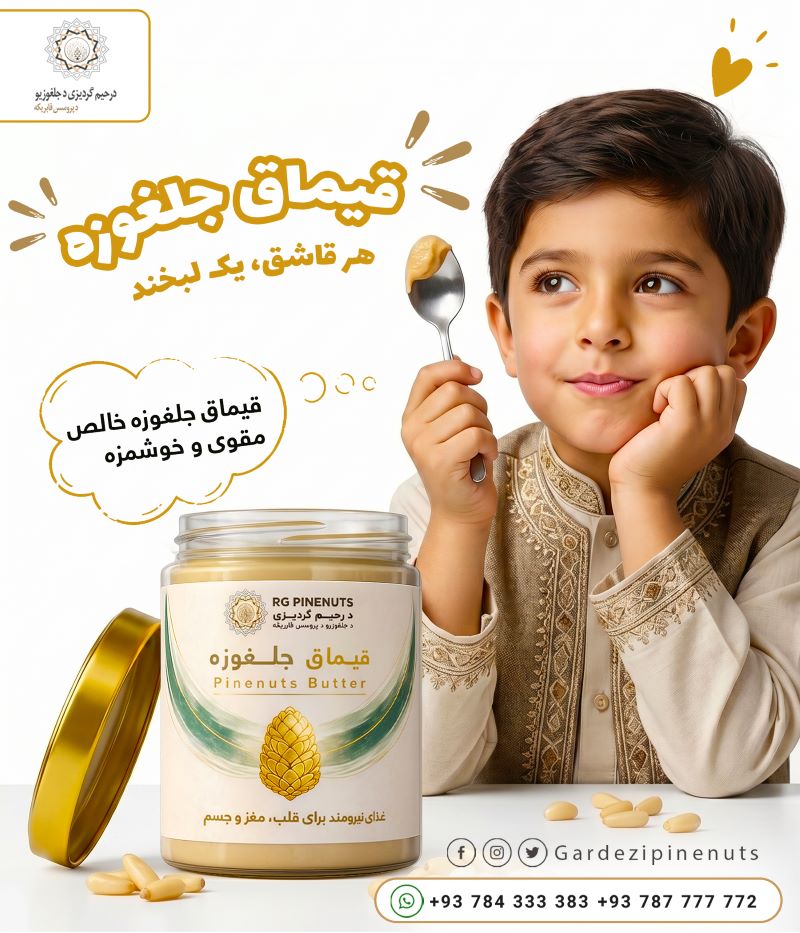
| Format | Typical use | Details |
|---|---|---|
| Bulk butter (pails/drums) | Manufacturers, repackers | [sizes, raw or dry-roasted] |
| Retail jars | Retail and e-commerce | [jar sizes, glass or PET] |
| Private label | Brands | [label support, minimums] |
| Co-packing / custom formulation | Brands, manufacturers | [texture, salt, inclusions] |
| Chilgoza kernels | Buyers grinding in-house | [grades, packaging] |
Specifications, minimum order quantities, and lead times are covered further down. [BRAND-SPECIFIC: fill every cell with real offerings. Delete formats you don't offer.]
Chilgoza is the edible seed of Pinus gerardiana, a pine of the Hindu Kush and Himalaya that grows at elevations of roughly 1,800 to 3,350 meters. In Afghanistan, chilgoza forests occur in the southeastern and eastern provinces of Paktia, Kunar, Nangarhar, Nuristan, and Paktika, and a value-chain study also names Khost as a key province.
Buyers choose it for flavor and story. One seller describes the kernels as longer and more slender than the stubby Mediterranean pine nut, with a stronger resin edge behind the sweetness. The harvest is wild and seasonal: sellers describe hand collection from August to October, and a trade overview gives September to October, with cones then sun-dried to release the seeds.
It’s also a significant crop. Chilgoza is an important non-timber forest product in Afghanistan, harvested every year by local communities and contractors.
Origin is the hardest claim to prove in this category, so we address it directly.
The historical pattern. Researchers who studied the supply chain found that, because of substandard local processing, Afghan chilgoza was often exported to Pakistan, where it was cleaned and shelled by machine and sold at higher prices. A related value-chain study reports that Afghanistan exports mostly partially processed nuts in bulk, mainly to China. In other words, an “Afghan” label has not always meant that the nuts were cleaned, shelled, and processed in Afghanistan.
What a credible supplier documents.
[BRAND-SPECIFIC: describe your actual chain: who harvests, where kernels are processed, where butter is made. If any step happens outside Afghanistan, say so plainly. Buyers trust clear disclosure far more than a blanket "100% Afghan" claim.]
Pine nut butter is a high-oil, perishable product, so the checks that matter are mostly about freshness and safety.
Freshness and specification. One export guide offers an illustrative baseline for kernels: moisture of 5.0 percent or less, free fatty acids at 1.5 percent or less at packing, and a peroxide value of 5 meq O₂/kg oil or less at packing, with oxygen-managed packaging recommended. That’s a vendor’s suggested baseline, not a regulation, but free fatty acids and peroxide value are the standard measures of rancidity. Ask your supplier for these figures per lot.
Contaminants. Aflatoxin limits depend on the destination. The EU sets maximum levels for tree nuts that range from 2.0 to 5.0 µg/kg for aflatoxin B1 and 4.0 to 10.0 µg/kg for total aflatoxins, depending on use. Under the EU rules, a product made at least 80 percent from a given tree nut is held to the limits for that nut, which plausibly covers a single-ingredient butter, so buyers should confirm with their own regulator or laboratory.
Food safety systems. Buyers comparing suppliers typically look for ISO certification, HACCP compliance, and organic certification, and directories of nut butter makers highlight SQF- and BRCGS-certified facilities. Ask which standard covers the plant that actually makes your butter, and request the current certificate.
Lot-level paperwork. A certificate of analysis for each lot, covering moisture, rancidity markers, aflatoxin, and microbiology, is the baseline.
[BRAND-SPECIFIC: list your certifications, certifying bodies, certificate numbers, test frequency, and the labs you use. Only include certifications you currently hold.]
Species is a safety question, not only a flavor one.
Pine mouth, also called pine nut syndrome, is an uncommon taste disturbance that typically begins 12 to 48 hours after eating pine nuts, with a bitter or metallic taste lasting up to several weeks. Between 2008 and 2010 the US FDA received 197 consumer reports, most involving nuts imported from China and eaten raw. The prime suspect is Pinus armandii, the Chinese white pine, a species the FAO does not list as an edible pine nut. The NSW Food Authority adds that Codex moved to exclude P. armandii and P. massoniana from its list of edible tree nuts, and that Chinese authorities introduced export controls.
Mixed lots complicate things. Taste disturbances have also been reported from samples containing a mixture of Pinus sibirica and P. armandii.
Chilgoza is a different species. I found no study linking it to pine mouth, but I also found no study ruling it out, so the responsible approach is documentation:
Analytical methods exist to back this up. Fatty acid profiling by gas chromatography has been used to identify the botanical origin of pine nuts in food products, and population-genetics researchers have genotyped 191 chilgoza trees in a natural stand at Gardiz in Afghanistan.
[BRAND-SPECIFIC: state whether you test species identity, and how (supplier declaration, fatty acid profile, DNA). Do not claim testing you don't perform.]
For labeling, use your own laboratory results. Public figures for chilgoza disagree. A review reports an average oil content of about 44.9 percent. One paper’s introduction gives roughly 51 percent fat, 13.6 percent protein, and 22.5 percent starch for the kernels. A trade blog cites about 19 g of fat per 28 g serving, which implies a much higher fat share. Natural variation, processing, and inconsistent sourcing could all play a role, and a lot-specific panel resolves the question.
Pine nuts are also known for pinolenic acid, which typically makes up about 14 to 19 percent of the fatty acids in pine nut oil, though reported values across pine species range from 0.2 to 22.4 g per 100 g. Be careful with health claims. Research on pinolenic acid is early, much of it uses concentrated oils or animals, and most markets restrict what a food label may say. Pine nuts are tree nuts for allergen labeling, and a sample wholesale listing carries a warning that the product may contain traces of various tree nuts.
A private-label program typically follows these stages:
Market benchmarks. A premium pine nut butter sells at retail for roughly $16 for an 8 oz sprouted organic jar to about $35 for a stone-ground dry-roasted spread. One wholesale listing offers a case of six 8 oz organic jars for $103.50. Use these only as context. They show the price tier you’re entering.
Be careful with claim wording. Terms like “natural,” “pure,” and “wild” have no standard legal definition for pine nut butter in many markets, so check them with your regulator or label consultant.
[BRAND-SPECIFIC: describe your actual private-label process, minimums, and label support.]
Requirements depend on the destination. Treat the following as a starting point for your own compliance review, not legal advice.
United States.
European Union. Contaminant limits (including aflatoxin) apply under Regulation (EU) 2023/915, as covered above, and the same destination-specific thinking applies to labeling and import controls.
Commercial documents. Typical shipments need a commercial invoice, packing list, certificate of origin, certificate of analysis, and any health or conformity certificates the destination requires. Agree on an Incoterm (FOB, CIF, or EXW, for example) up front.
Classification. Shelled pine nuts are commonly classified under HS 0802.92. A processed butter is likely to fall under a different heading, so confirm the code with your customs broker.
Screening. Trade with Afghanistan involves sanctions and counterparty screening obligations in many jurisdictions. Work with trade counsel and screen every party in the chain.
[BRAND-SPECIFIC: state your FDA registration status, DUNS, and what documents you provide with each shipment. Only claim registrations you hold.]
Seasonal harvests and a landlocked origin make continuity a legitimate buyer question, and recent events make it urgent.
Pakistan and Afghanistan have five major border crossings, and trade across them has been severely disrupted. NPR reported in February 2026 that the closure had stretched beyond 100 days, the longest in recent decades, and an AP report in August 2026 said sporadic fighting had left the border closed to trade, cutting Afghan producers off from their primary export market.
What this means for buyers:
Direct trade routes are also developing: a trade overview notes Afghanistan resuming pine nut exports to China, including a first charter flight.
[BRAND-SPECIFIC: describe your actual routes, warehousing, buffer stock, and typical lead times. Do not publish route or stock claims you can't back up.]
Chilgoza is a vulnerable species. The IUCN Red List classifies it as near threatened. A study in Nuristan found medium regeneration (420 plants per hectare) and identified unlawful cutting and overgrazing as threats. Another linked poor regeneration to intense cone and firewood harvesting in unmanaged areas. Cones are often harvested without regard to tree health, and older trees that no longer produce enough cones are felled for firewood.
The crop also supports livelihoods, and some processing creates local employment, such as a Kabul factory employing mainly women.
Buyers increasingly ask for specifics. Vague claims like “sustainably harvested” invite scrutiny when the research documents unsustainable practices in places. If you can show community partnerships, harvest limits, or regeneration support, say so concretely.
[BRAND-SPECIFIC: describe documented practices. Omit this claim if you can't support it.]
We don’t publish a single price, because cost depends on format, volume, roast, packaging, and destination. A useful RFQ includes:
[BRAND-SPECIFIC: state MOQs, typical lead times, sample policy, and payment terms.]
[Sample policy and cost][CTA: Request a quote → form link] [CTA: Request samples → form link] [Contact email / phone / WhatsApp]
Who is a reliable Afghan pine nut butter supplier?
Look for documented origin, a named species, lot-level test results, current food-safety certification, and clear export paperwork. Ask for sample certificates before you commit.
Is the butter made in Afghanistan?
That depends on the supplier. Historically, Afghan nuts were often processed in Pakistan, so ask where the kernels are shelled and where the butter is ground.
What species is Afghan pine nut butter made from?
Chilgoza, the seed of Pinus gerardiana. Confirm it on the spec sheet.
Can it cause pine mouth?
Pine mouth is mainly linked to Pinus armandii, a different species. I found no research tying chilgoza to it, but species documentation and unmixed lots are the best safeguards.
What are typical minimum order quantities?
They vary by supplier and format. For comparison, one private-label peanut butter listing shows 5,000 to 30,000 units. [Your MOQ]
What certifications should I ask for?
Ask for current ISO, HACCP, SQF, or BRCGS certification as relevant, plus organic or other certificates if you plan to make those claims, and check the issuer.
What does the US importer need to do?
Maintain an FSVP, file Prior Notice before arrival, make sure the foreign facility’s FDA registration is current, and ensure the label meets US rules.
How should it be stored?
Cool, dark, and sealed. Chilgoza kernels turn quickly at room temperature, and one pine nut butter brand advises storage of up to one year in a cool, dry, dark place. Use your own tested shelf-life.
Is Afghan pine nut butter organic?
Not automatically. Wild harvest isn’t the same as certified organic. Ask for the certificate.
Can you handle private label?[Yes/no, with details.]