
Last updated October 2026
Pine nut oil is a pale golden oil pressed from pine kernels, and what sets it apart is a fatty acid you won’t find in meaningful amounts in olive, sunflower, or flaxseed oil: pinolenic acid. It makes up roughly 14 to 19 percent of the oil’s fatty acids, and it is the reason researchers have spent the past two decades studying pine nut oil for appetite control, cholesterol, and inflammation. It is also a big part of why a small bottle costs so much.
The science is interesting but young. Most of it comes from cell experiments, animal studies, and a few small human trials, so any claim that a spoonful a day will transform your health goes further than the evidence does. This guide covers what pine nut oil is, what the research does and doesn’t show, how to cook with it, who should be careful, and how to pick a bottle that is fresh and genuine.
The short version
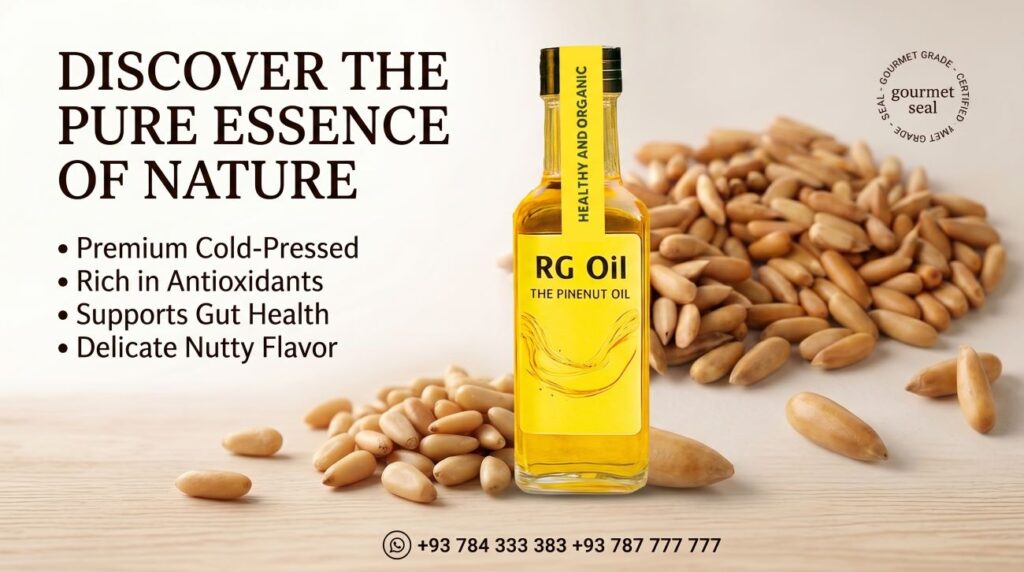
Pine nut oil, also sold as pine seed oil or, in the Russian-speaking trade, cedar nut oil, is a vegetable oil pressed from the edible seeds of certain pine trees. Those seeds are the same pine nuts that go into pesto and rice pilaf.
Not every pine nut makes the same oil. The species matters, and it is worth knowing the main ones:
Most pine nut oil is made by pressing the kernels. Cold-pressed, unrefined oil is pressed at low temperatures and filtered, which keeps the color, the faint pine-and-butter aroma, and more of the delicate compounds. Refined oil is processed further to neutralize flavor and extend shelf life, and it is more common in capsules. Either way, the kernels are more than half fat, so they press readily, but it takes a lot of them to fill a bottle.
One distinction matters because search results mix them up: pine nut oil is not pine needle oil or pine essential oil. Those are made from needles, bark, or resin and are not meant to be eaten. If you are buying something to cook with or take internally, the label should say pine nut oil, pine seed oil, or name the species of the seed.
What does it taste like? Cold-pressed pine nut oil is delicate: lightly nutty, faintly sweet, a little buttery, with a soft resinous note in the background. It is gentler than walnut oil and less peppery than a good olive oil, which is why it works as a finishing touch rather than a loud flavor.
People have gathered pine nuts as food across Eurasia and the Mediterranean for a very long time, and the oil has its own regional traditions. In Siberia, the seeds of the Siberian pine, locally called cedar nuts, are gathered from the forest and pressed into oil used in home cooking and as a folk remedy. In the high mountain forests of the western Himalaya, chilgoza pine cones are gathered by hand and the kernels are traded as a prized food nut. Korean cooking has used pine nuts for centuries, in everything from porridge to garnishes.
What changed in the last twenty years is the science. In the mid-2000s, researchers began publishing studies on pinolenic acid and satiety hormones, and broader reviews followed in 2016, 2021, and 2023. That research is a big reason pine nut oil moved from a regional specialty to something you now find in wellness and specialty food shops far from where the trees grow.
Like most nut oils, pine nut oil is made almost entirely of unsaturated fats. Linoleic acid and oleic acid, the same fats common in sunflower and olive oils, account for much of it. What makes it unusual is the pinolenic acid.
Pinolenic acid is an 18-carbon fatty acid with three double bonds in an unusual arrangement. Scientists group it with the delta-5 non-methylene-interrupted fatty acids, a rare family in the food supply. It sits in the omega-6 family, which is worth saying plainly because people sometimes assume anything marketed as a healthy oil is an omega-3. Pine nut oil is not a source of the omega-3 fats found in fish oil, flaxseed, or algae, and it shouldn’t be used as a replacement for them.
Reviews of the research put pinolenic acid at about 14 to 19 percent of the fatty acids in pine nut oil. Cells and tissues can also convert it into a related compound called eicosatrienoic acid, and some researchers think that conversion product may account for part of the oil’s effects, though that is still being worked out.
Beyond fatty acids, nut oils generally carry some vitamin E and other antioxidant compounds. Amounts vary with the species, the growing conditions, and how the oil was processed, so nobody should buy pine nut oil primarily as a vitamin supplement.
Before the details, a note on how to weigh them. Nutrition research climbs a ladder: test-tube and cell experiments first, then animals, then small human trials, then large, long human studies. Pine nut oil sits mostly on the lower rungs. That doesn’t make the findings meaningless, but it does mean “may” and “could” are the honest words here. The review papers published since 2016 reach roughly the same conclusion: the effects are promising and deserve more investigation, not that they are proven.
This is the best-studied area. In a 2008 randomized, double-blind, placebo-controlled crossover trial, 18 overweight postmenopausal women took 3 grams of Korean pine nut oil, either in free fatty acid or triglyceride form, or an olive oil placebo, with a light breakfast. Blood levels of the satiety hormone CCK were about 60 percent higher after the free fatty acid form and about 22 percent higher after the triglyceride form than after placebo, and GLP-1 was about 25 percent higher after the free fatty acid form. The researchers also noted lower prospective food intake, meaning the women expected they would want to eat less afterward.
A second trial that year tested a Korean pine nut oil product in 42 overweight women. A 2-gram dose of the free fatty acid form, taken 30 minutes before a buffet lunch, cut the amount of food eaten by about 9 percent compared with olive oil. The triglyceride doses did not significantly change intake, and none of the doses changed self-reported appetite ratings.
Put together, that is a plausible mechanism and a small, measurable effect under controlled conditions, in one product form, in a few dozen women. What is missing is evidence that this translates into meaningful weight loss over months. If you see pine nut oil marketed as a weight-loss solution, treat it as marketing running ahead of the science.
Reviews of the research describe lipid-lowering effects in some animal studies, including rat experiments suggesting that pinolenic acid prompts the liver to take up more LDL cholesterol from the blood. Human evidence is thin. If you have high cholesterol, pine nut oil is not a substitute for medication, dietary changes, or the plan your clinician has set.
Laboratory work suggests pinolenic acid has anti-inflammatory activity and may influence how immune cells, including lymphocytes, behave. A 2023 review from Cardiff University looked specifically at pine nut fatty acids in inflammatory conditions such as atherosclerosis, diabetes, and rheumatoid arthritis, and described pinolenic acid as a less-studied fatty acid with potential that still needs human confirmation.
In cell studies, pinolenic acid acts on two fatty acid receptors, FFAR1 and FFAR4, that are involved in glucose-dependent insulin release and insulin sensitivity. Some animal studies of pine nut extracts have also shown lower fasting blood glucose. This is an area of scientific curiosity, not a treatment. Anyone managing diabetes, especially people on glucose-lowering medication, should check with their clinician before adding concentrated oils to their routine.
Animal studies covered in the reviews found that pine nut oil raised the activity of protective antioxidant enzymes and lowered a marker of lipid peroxidation called malondialdehyde. Again, promising and early.
In Russia and neighboring regions, unrefined Siberian pine nut oil has a folk reputation as a remedy for stomach complaints, and it is still sometimes marketed for reflux or gastritis. Clinical evidence for these uses is weak, so we can’t recommend the oil for them. Persistent digestive symptoms deserve a proper medical evaluation.
Pine nut oil is a rich source of an unusual fatty acid with interesting biology, a few small trials pointing toward modest satiety effects, and a lot of early-stage work on inflammation, lipids, and glucose control. It is a reasonable, flavorful addition to a varied diet. It is not a cure, a replacement for medical care, or a proven weight-loss aid.
| Oil | What stands out | Best use | Heat |
|---|---|---|---|
| Pine nut oil | Pinolenic acid; delicate, buttery-nutty flavor | Finishing, dressings, drizzling | Low smoke point; avoid high-heat cooking |
| Extra virgin olive oil | Rich in monounsaturated fat; fruity, peppery | Dressings, sautéing, everyday cooking | Moderate; smoke point often cited around 320°F (160°C) |
| Walnut oil | Rich, assertive nutty flavor | Cold sauces, dressings, finishing | Low; not for frying |
| Flaxseed oil | Very high in plant omega-3 (ALA) | Cold use only, such as smoothies or dressings | Do not heat |
| Avocado oil | Mild flavor, very stable | Searing, roasting, frying | High; smoke point often cited above 500°F (260°C) |
Smoke points vary by brand, refining, and freshness, so treat these figures as ballpark.
The takeaway: pine nut oil competes with walnut oil and flaxseed oil in the cold, special-occasion category, not with the workhorse oils. You still want a stable oil for everyday cooking and an omega-3 source if your diet lacks one. Pine nut oil is an addition to the shelf, not a replacement for anything on it.
“It burns fat.” Nothing in the research shows that pine nut oil burns body fat. The studies measured satiety hormones and short-term food intake, which is a different thing.
“More is better.” The oil is calorie-dense, and there is no evidence that larger amounts produce larger benefits. The trial doses were a few grams.
“All pine nut oil is the same.” Species, pressing method, freshness, and storage change the flavor, the fatty acid profile, and the quality. A tired bottle of blended oil is not equivalent to fresh, single-species, cold-pressed oil.
“It’s an omega-3 oil.” Pinolenic acid belongs to the omega-6 family. Pine nut oil does not replace fish, flax, chia, or walnuts as a source of omega-3s.
Treat pine nut oil like a good finishing oil. It has a relatively low smoke point, and heating it strips the delicate flavor you paid for while degrading the oil. Add it at the end, off the heat or at the table.
Ways that work well:
Pine nut vinaigrette. Whisk 3 tablespoons pine nut oil with 1 tablespoon lemon juice or white wine vinegar, 1 teaspoon Dijon mustard, a pinch of salt, and a little honey if you like. Toss with arugula or other bitter greens and scatter toasted pine nuts on top.
Lentil soup finish. Make your usual lentil soup with a stable oil. Ladle it into bowls, add a squeeze of lemon, and finish with half a teaspoon of pine nut oil per bowl.
Garlic-yogurt dip. Stir minced garlic, lemon juice, and salt into a cup of plain yogurt. Spoon it onto a plate, drizzle with pine nut oil, and top with toasted pine nuts and torn mint. Serve with flatbread or grilled vegetables.
Start with a teaspoon at a time. The oil is intensely flavored, calorie-dense (like any oil, roughly 120 calories per tablespoon), and expensive. A small amount at the end of cooking does most of the work.
Pine nut oil is also sold as softgel capsules, often standardized for pinolenic acid content. Doses on supplement labels vary widely, and the amounts used in trials (2 to 3 grams of oil, given under controlled conditions) are not a dosing recommendation for the public. If you choose a supplement, follow the label and talk to your clinician or pharmacist, particularly if you take medication.
Supplements aren’t evaluated for effectiveness the way drugs are, so look for independent third-party testing seals, such as USP or NSF in the United States, and a Natural Product Number (NPN) on products sold in Canada. If you live elsewhere, including the UAE, check what your local regulator requires for supplements and what the label can legally claim.
Pine nut oil also appears in some skin and hair products and in traditional topical remedies. The evidence for this is thin. If you want to try it on your skin, patch test a small area first and stop if you notice irritation.
For most people, pine nut oil in food amounts is well tolerated. A few cautions are worth knowing.
Allergies. Pine nut allergy is real and can be serious. People with a pine nut or tree nut allergy should avoid pine nut oil unless an allergist has said otherwise. Highly refined oils contain less protein than unrefined ones, but less is not a guarantee, and unrefined cold-pressed oil is the riskier choice.
Pine mouth. Some people develop a bitter or metallic taste that begins a day or two after eating pine nuts and can last for days or even a few weeks. It is not considered dangerous, but it is miserable. The first reports date to around 2001, and the cause is still not settled; some reports have pointed to particular species, notably Pinus armandii. Whether pine nut oil can trigger it is not well established. If you have had pine mouth before, be cautious, and if it develops after you try an oil, stop and note the brand and the species on the label.
Medications and health conditions. Concentrated oils, especially in capsule form, deserve a conversation with your clinician if you are pregnant or breastfeeding, have gallbladder disease or another condition that affects fat digestion, are managing diabetes or blood lipids with medication, or have surgery scheduled. This is general caution, not a warning about a specific documented interaction.
Children. Research in children is lacking, so ask a pediatrician before giving supplements. A drizzle on a family meal is different from concentrated capsules.
Rancidity. Unsaturated oils oxidize. Stale pine nut oil tastes bitter, sharp, or like old paint, and there is no reason to eat it. When in doubt, smell it, and if it’s off, throw it out.
Calories. It’s an oil, so it is energy-dense. Small amounts add up less than you might think, but large ones add up fast.
Pine nut oil is a specialty product with a high price, which makes it a target for shortcuts. Here is what to look for:
Keep the bottle tightly closed, away from the stove and sunlight. Once opened, the refrigerator is the best place for it, and many producers recommend using it within a few months. Chilled oil may turn cloudy or thicken, which is normal and clears at room temperature. Give it a sniff before each use: fresh oil smells mild and sweet, while rancid oil smells sharp or like paint.
It comes down to labor and scarcity. Pine nuts grow inside cones, and many pine species grow slowly and bear heavy crops only every few years, with leaner years in between. Cones from tall trees are often harvested by hand, and the kernels then have to be extracted and shelled before pressing. Add the fact that it takes a large quantity of kernels to produce a small amount of oil, and compare that with sunflower or soybean oil, where mechanized farming does the heavy lifting. The price gap makes sense.
It also explains why quality varies. When margins are tight, there is more temptation to stretch a batch or cut corners on storage. Buying from a producer that is open about its sourcing and handling is the cheapest insurance you can get.
If your goal is general nutrition rather than a concentrated dose of pinolenic acid, whole pine nuts are the more practical choice. The kernels contain protein, fiber, vitamin E, vitamin K, magnesium, and manganese, much of which the oil leaves behind. They are also easier to buy, store, and add to a meal.
The oil, in turn, delivers pinolenic acid in concentrated form, and its flavor works as a seasoning. The studies above used measured amounts of oil, so their results shouldn’t be assumed to apply to a handful of nuts. Whole pine nuts contain pinolenic acid too, but in smaller and more variable amounts.
Whichever you buy, species and freshness matter. Pine nuts from different species differ in size, shape, flavor, and oil content, and kernels go rancid more quickly than most people expect. Store them airtight in the refrigerator or freezer, and toast them in small batches.
[Brand tie-in: add one or two sentences here about the Gardizi Pine Nuts range once you’ve confirmed which products and species you want to feature. See the publishing notes below.]
Is pine nut oil good for you? In food amounts it is a reasonable source of unsaturated fats and of an unusual fatty acid, pinolenic acid, that early research links with effects on appetite, blood lipids, and inflammation. The human evidence is limited, so think of it as a flavorful addition to a balanced diet rather than a health fix.
Can you cook with pine nut oil? Not at high heat. It has a low smoke point and loses flavor when heated hard. Use it to finish dishes: drizzle it on cooked food, stir it into dressings, or add it at the end of cooking.
Does pine nut oil help with weight loss? Small trials in overweight women found higher satiety hormone levels after Korean pine nut oil, and one found about 9 percent less food eaten at a test meal after a 2-gram dose of the free fatty acid form. There is no good evidence yet that the oil produces meaningful weight loss over time.
How much pine nut oil should I take? There is no established recommended dose. As a food, start with a teaspoon as a finishing oil. Supplement doses vary by product, so follow the label and ask your clinician if you take medication or have a health condition.
What is the difference between pine nut oil and pine needle oil? Pine nut oil is pressed from edible seeds and used as food. Pine needle oil is an essential oil made from needles, bark, or resin and is not intended for eating.
How long does pine nut oil last? Unopened and stored cool and dark, it lasts until the best-before date on the label. After opening, refrigerate it and plan to use it within a few months, or follow the producer’s instructions. Discard it if it smells sharp, bitter, or like paint.
Is pine nut oil safe if I have a nut allergy? Not without an allergist’s approval. Pine nut allergy exists, and unrefined oil may retain allergenic proteins.