
Finding a reliable Afghan pine nut export company is about more than locating a source of pine nuts. International buyers need dependable product quality, professional processing, appropriate packaging, traceability, consistent supply, and an exporter that understands the requirements of international B2B trade.
Afghanistan is an important origin for Chilgoza pine nuts (Pinus gerardiana), a premium pine nut associated with the dry-temperate forests of the Hindu Kush-Himalayan region. FAO identifies Chalghoza pine kernels as a traded food product across Afghanistan, Pakistan, India, and Middle Eastern markets.
For importers, wholesalers, distributors, retailers, food manufacturers, restaurants, hotels, and specialty-food businesses, working with an Afghan pine nut export company can provide direct access to origin while supporting commercial requirements such as bulk supply, grading, processing, packaging, and export preparation.
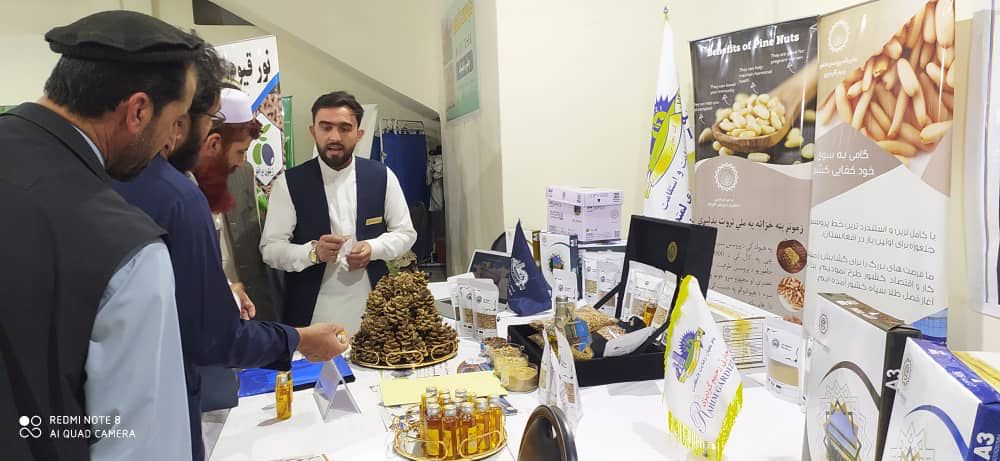
An Afghan pine nut export company is a business involved in sourcing, processing, preparing, packaging, and supplying Afghan pine nuts to buyers in international markets.
A professional exporter may manage multiple stages of the supply chain:
Sourcing → Cleaning → Processing → Sorting → Grading → Quality Control → Packaging → Storage → Documentation → Export
For international buyers, this integrated approach matters because pine nuts are a high-value, oil-rich food product whose quality can be influenced by harvesting, handling, processing, packaging, transportation, and storage.
A serious export company should therefore be able to discuss not only price, but also:
Afghan pine nuts are particularly associated with Chilgoza pine (Pinus gerardiana).
The species occurs naturally in parts of eastern Afghanistan, including areas of Nuristan, Kunar, Laghman, Nangarhar, Kapisa, Paktya, Khost, and Paktika. Afghanistan’s biodiversity documentation identifies Chilgoza as an economically important forest species and notes threats including unsustainable seed collection, timber cutting, firewood use, and overgrazing.
This makes responsible sourcing and post-harvest management important considerations for companies participating in the international pine nut trade.
Historically, Chalghoza kernels have been consumed in Afghanistan and neighboring markets as a dry fruit, snack, dessert ingredient, and confectionery ingredient.
For international buyers, origin can influence product positioning, supply-chain transparency, and commercial differentiation.
Sourcing from Afghanistan can offer buyers access to:
However, origin alone should not be treated as a substitute for quality assurance.
Importers should evaluate the complete supplier operation, including processing, sorting, packaging, storage, traceability, documentation, and ability to meet agreed specifications.
A professional Afghan pine nut export company can serve different international buyer requirements by offering multiple product formats.
Shelled pine nut kernels are suitable for:
Buyers may specify requirements related to:
Whole pine nuts can be supplied for roasting, further processing, foodservice, retail packaging, and other commercial applications.
In-shell products may be suitable for buyers that perform their own processing, roasting, packaging, or distribution.
Golden pine nuts can be positioned for premium culinary and specialty-food applications where appearance is an important purchasing characteristic.
Pine nut oil provides a value-added product format for specialized culinary and ingredient markets, subject to the specifications and regulatory requirements of the destination market.
Pine nut butter can serve specialty-food applications and provides an additional value-added format for international buyers.
Processing is one of the most important areas for an export company seeking to compete in international markets.
Depending on the product format and facility, processing may involve:
The objective is to transform harvested raw material into a commercially consistent product suitable for the buyer’s specification.
The Afghan pine nut sector is increasingly seeing investment in processing and export capability.
In August 2026, FAO reported that an Afghan pine nut business participating in Afghanistan’s first International Agro Expo secured an agreement to supply 12 tonnes of pine nut kernels to a buyer in Türkiye. The business was also planning to acquire equipment for cleaning, sorting, processing, and packaging to help meet international standards and expand export opportunities.
This illustrates an important development in the sector: moving beyond raw commodity trading toward greater value addition, professional processing, and international-market preparation.
For international buyers, quality should be measurable and documented rather than described only with terms such as “premium” or “high quality.”
A professional quality-control program can include several checkpoints.
Raw pine nuts can be assessed for:
Cleaning helps remove unwanted materials before further processing.
Sorting separates product according to defined quality characteristics.
Depending on the facility, exporters may use combinations of:
Grading enables the exporter and importer to establish a consistent commercial specification.
Finished products should be checked against the agreed buyer specification before shipment.
Pine nut quality technology is developing rapidly.
A 2026 study published in LWT – Food Science and Technology investigated a non-destructive detection system using tri-modal feature fusion to identify deterioration associated with acidification and oxidation in pine nuts. The research used multiple complementary information sources and machine-learning approaches to evaluate quality without relying solely on destructive testing.
This is an emerging research technology rather than a requirement for every commercial exporter. However, it demonstrates the direction of the industry: quality assessment is increasingly moving toward non-destructive sensing, automated inspection, and data-assisted decision-making.
For exporters, such technologies may eventually help improve:
Pine nuts contain significant amounts of oil, making oxidative stability an important consideration during storage and transportation.
A 2025 review of nut oxidation identified numerous factors that influence quality, including species, variety, fatty-acid composition, harvest conditions, mechanical damage, processing, packaging, transportation, and storage. The review also identified smart packaging as an area of future development.
For an Afghan pine nut export company, this means quality management should continue beyond harvesting and processing.
The supply chain should consider:
Harvest → Handling → Processing → Packaging → Storage → Transportation → Importer Storage
Every stage can influence final product quality.
Packaging is not simply a method of containing the product.
For oil-rich foods, packaging can help manage exposure to oxygen, moisture, light, and other environmental factors.
Potential commercial packaging formats include:
The correct choice depends on:
Research on nuts consistently demonstrates the importance of temperature and packaging in maintaining quality during storage. For example, 2025 research on shelled pecans found that modified-atmosphere packaging and controlled temperatures reduced quality deterioration compared with less protective storage conditions. This evidence is from pecans rather than Chilgoza, so it should be used as broader nut-storage evidence rather than a direct Chilgoza-specific prescription.
There is also research specifically concerning Chilgoza.
A study indexed by PubMed investigated drying and packaging methods for Chilgoza nuts and found that drying conditions and packaging material affected moisture, water activity, and sensory characteristics during storage. The study reported favorable results for cabinet drying and certain barrier packaging materials under its experimental conditions.
Commercial exporters should nevertheless establish storage parameters based on their actual product, packaging, facility, climate, shipment duration, and validated quality requirements rather than treating one experimental result as a universal industry standard.
An especially interesting 2026 development involves the pine nut shell itself.
Researchers developed experimental antioxidant packaging films incorporating Chilgoza pine nut shell extract. The study reported improvements in barrier and antioxidant properties and observed reductions in oxidation markers in pine nuts packed with the experimental films.
This research is significant for two reasons.
First, it explores a potential method for improving preservation of lipid-rich foods.
Second, it demonstrates the possibility of converting a pine nut processing by-product into a value-added material.
This represents an emerging connection between:
Pine Nut Processing → Waste Valorization → Sustainable Packaging → Shelf-Life Research
It is still research-stage technology and should not be presented as a standard commercial packaging solution unless it has been validated and adopted for the relevant market.
Traceability is becoming increasingly important in international food supply chains.
A strong traceability system can connect:
Origin → Raw Material Batch → Processing → Sorting → Quality Control → Packaging → Finished Batch → Shipment
For importers, this can improve visibility and make it easier to investigate a quality issue if one occurs.
Useful traceability information can include:
An exporter should only claim traceability capabilities that it actually operates and can demonstrate.
International pine nut transactions require appropriate documentation based on the destination country, product, trade terms, and applicable regulations.
Depending on the transaction, buyers may require documentation such as:
Import requirements vary by country.
Therefore, exporters and importers should confirm current requirements with the competent authorities and customs professionals in the destination market before shipment.
Afghan pine nuts have historical commercial relevance in Middle Eastern markets, and the region remains an important destination category for Chalghoza products. FAO identifies Chalghoza kernels as a food product traded in Afghanistan, Pakistan, India, and Middle Eastern countries.
For UAE buyers, an exporter should be prepared to discuss:
A dedicated UAE service page can address those requirements separately rather than attempting to make one generic international page rank for every country.
An Afghan pine nut export company can serve multiple B2B buyer categories.
Importers may purchase bulk pine nuts for distribution into national or regional markets.
Wholesalers can purchase commercial quantities for resale to retailers and food businesses.
Distributors may supply supermarkets, restaurants, hotels, foodservice companies, and specialty-food stores.
Manufacturers can use pine nut kernels as ingredients in:
Hospitality businesses may require consistent quantities for menus and food preparation.
Retail businesses may purchase bulk kernels for repacking under their own brands where permitted by applicable regulations.
Price is important, but it is only one part of the commercial equation.
The more useful calculation is often:
Landed Cost = Product Cost + Packaging + Freight + Insurance + Duties/Taxes + Inspection + Other Applicable Costs
A low initial quotation can become less attractive if the shipment has:
A professional exporter should therefore provide a transparent quotation based on a clearly defined specification.
Before placing an order, international buyers can ask:
Bulk purchasing can provide a practical sourcing solution for companies that have recurring commercial demand.
Potential bulk buyers include:
For recurring buyers, consistency becomes particularly important.
A supplier relationship should ideally establish a repeatable specification covering:
Product + Grade + Size + Moisture + Packaging + Quantity + Documentation + Delivery Terms
This gives both buyer and exporter a common commercial reference point for future orders.
The economic value of Chilgoza pine forests extends beyond the product itself.
Afghanistan’s biodiversity documentation identifies Chilgoza as an economically important forest resource and highlights threats affecting its natural regeneration and long-term sustainability.
FAO’s 2026 reporting also demonstrates the livelihood dimension of pine nut processing: one Afghan pine nut business reported that around 1,600 families earn income from shelling its pine nuts, with women representing approximately 90% of its workforce.
Responsible sourcing can therefore involve attention to:
An exporter should make specific sustainability claims only where it has evidence to support them.
A modern Afghan pine nut export operation can be viewed as a complete value chain:
Pine nuts are sourced from Afghan production areas.
Harvested pine nuts enter the supply chain.
Raw material is inspected and prepared for processing.
Unwanted materials are removed.
Depending on the product, nuts may be shelled or otherwise prepared.
Product is separated according to defined commercial specifications.
The finished product is assessed against agreed requirements.
Product is packed according to destination and buyer requirements.
Finished goods are stored under appropriate conditions.
Documentation and shipment arrangements are completed.
The product reaches the importer, distributor, manufacturer, retailer, or foodservice buyer.
Gardizi Pinenuts | Premium Afghan Pine Nuts was founded in 2021 in Afghanistan and focuses on supplying high-quality Afghan pine nuts. Its product range includes Golden Pine Nuts, Pine Nut Kernels, Pine Nut Oil, and Pine Nut Butter, with a stated focus on quality, hygiene, innovation, and trust.
For a commercial website, these company-specific claims should be supported with first-party evidence such as product specifications, facility photographs, packaging photographs, export documentation examples, certifications where applicable, and verified market information.
The company’s positioning can be expressed around:
Afghan Origin → Quality Processing → Careful Handling → Export-Ready Products → International B2B Supply
Rather than relying only on marketing language, the strongest commercial page should show buyers exactly what the company can supply and how its quality and export processes work.
International buyers can make the sourcing process more efficient by including the following information in their inquiry:
A detailed inquiry enables the exporter to prepare a quotation based on the buyer’s actual commercial requirements.
An Afghan pine nut export company sources and prepares Afghan pine nuts for international buyers and may manage processing, sorting, grading, packaging, documentation, and export logistics.
Afghanistan is particularly associated with Chilgoza pine (Pinus gerardiana). Product formats can include whole pine nuts, in-shell pine nuts, kernels, and value-added products.
Yes. Bulk purchasing can be suitable for importers, wholesalers, distributors, food manufacturers, retailers, restaurants, hotels, and other commercial buyers.
Chilgoza is a distinct pine species associated with the Hindu Kush-Himalayan region. FAO identifies its kernels as a traded food product in Afghanistan and surrounding markets.
Processing can include cleaning, shelling, sorting, grading, quality inspection, packaging, and storage, depending on the product specification and export facility.
Storage requirements depend on the product, packaging, temperature, moisture, oxygen exposure, and intended shelf life. Importers should follow the supplier’s validated storage specifications rather than applying a generic temperature or shelf-life claim.
Afghan pine nuts are traded internationally, and recent FAO reporting documented a 2026 agreement for 12 tonnes of Afghan pine nut kernels to be supplied to a buyer in Türkiye.
Depending on the exporter’s capabilities, customized bulk, vacuum, foodservice, retail, or private-label packaging may be available. Packaging requirements should be established before production and shipment.
Importers should evaluate product specifications, processing, quality control, packaging, storage, traceability, documentation, export experience, communication, lead times, and the supplier’s ability to consistently meet agreed specifications.
The international pine nut market is increasingly influenced by quality consistency, professional processing, improved inspection, packaging technology, traceability, sustainability, and reliable export logistics.
Afghanistan has a distinctive position in the Chilgoza pine nut supply chain, but successful international sourcing depends on more than geographic origin. Buyers need an exporter capable of converting Afghan-origin raw material into a consistent, properly handled, well-documented commercial product.
For international importers, the right sourcing process begins with a clear product specification and continues through sampling, quality evaluation, commercial agreement, processing, packaging, documentation, shipment, and destination-market compliance.
As research advances in non-destructive pine nut quality detection and innovative packaging—including experimental applications using Chilgoza pine nut shell extracts—the industry is moving toward more technology-supported approaches to quality preservation and value creation.
For businesses looking to source premium Afghan pine nuts for international markets, the most effective next step is to define the required product, grade, quantity, packaging, destination, and documentation requirements and request a detailed export quotation.