
Finding a reliable international pine nut supplier is essential for importers, wholesalers, distributors, retailers, food manufacturers, restaurants, hotels, and specialty food businesses that require consistent quality and dependable global supply.
Pine nuts are premium edible seeds valued for their delicate flavor, rich texture, nutritional profile, and versatility across international cuisines. For commercial buyers, however, sourcing pine nuts is about more than product appearance. Origin, kernel quality, processing, moisture management, storage, packaging, traceability, food safety, logistics, and supply consistency all influence the final value of a shipment.
A professional international pine nut supplier should therefore provide more than a product catalogue. Buyers need a supply partner capable of understanding international B2B requirements and maintaining quality throughout the journey from origin to destination.
This guide explains what global buyers should consider when sourcing pine nuts internationally, including product types, quality control, processing, storage, packaging, export considerations, innovation, sustainability, and supplier evaluation.
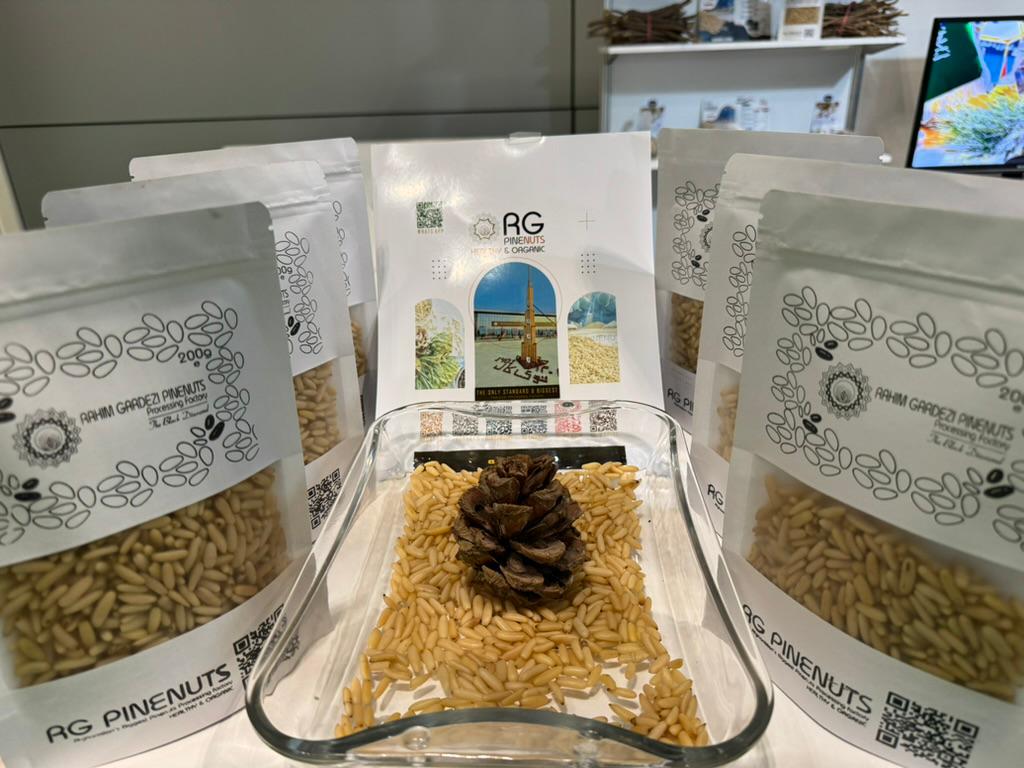
An international pine nut supplier is a company that sources, processes, packages, and supplies pine nuts to buyers in international markets.
Depending on the supplier’s capabilities, products may include:
International buyers may include:
The right supplier should be able to explain the product’s origin, specifications, processing methods, packaging options, quality controls, storage conditions, and export capabilities rather than simply offering a price.
Pine nuts contain substantial amounts of oil, which makes them nutritionally valuable but also creates quality-management challenges during storage and transportation.
Scientific reviews of tree nuts show that their shelf life is strongly influenced by factors such as temperature, moisture, oxygen, light, packaging, processing, and whether the product is stored in-shell or as kernels. Oxidative deterioration can affect flavor, aroma, nutritional quality, and commercial acceptability.
This means international buyers should evaluate the entire supply chain rather than judging a supplier exclusively by its quoted price.
A professional supplier should have a defined approach to:
The result is a more predictable product for the buyer and a more reliable international supply relationship.
Pine nut kernels are among the most commercially important formats for international food businesses because they are ready to use in cooking and food manufacturing.
They can be used in:
For B2B buyers, kernel specifications can be particularly important. Depending on the application, buyers may require particular requirements for:
A supplier should be able to discuss these specifications before an order is finalized.
Whole or in-shell pine nuts can be suitable for specialty retail, traditional markets, roasting applications, and consumers who prefer a less processed product.
Storing nuts in-shell can provide advantages for shelf-life management compared with shelled kernels, although actual storage performance depends on species, moisture, temperature, packaging, and other conditions.
Bulk pine nuts are designed for commercial buyers purchasing larger quantities.
Bulk supply can be suitable for:
International bulk buyers should evaluate the supplier’s ability to maintain consistent specifications between shipments rather than focusing only on a single sample.
Pine nut oil is a value-added product that can be used in specialty food applications, culinary products, dressings, and premium food formulations.
For buyers sourcing pine nut oil internationally, important considerations include:
Because edible oils are particularly sensitive to oxidation, packaging and storage conditions should be considered part of the product specification rather than an afterthought.
Pine nut butter provides another value-added format for food businesses seeking premium nut and seed products.
Potential applications include:
Commercial buyers should discuss texture, formulation, packaging, shelf life, and storage requirements with the supplier before placing a large order.
Afghanistan is associated with Chilgoza pine, scientifically known as Pinus gerardiana. FAO describes Chalghoza pine as occurring naturally in the dry temperate forests of Afghanistan, Pakistan, and India, and identifies its kernels as an internationally traded food product.
More recent Afghan biodiversity documentation identifies Pinus gerardiana as an economically valuable species occurring in Afghanistan’s eastern forest regions, including areas of Nuristan, Kunar, Laghman, Nangarhar, Kapisa, Paktia, Khost, and Paktika. The same source notes pressures including timber cutting, unsustainable seed collection, and overgrazing.
For international buyers interested in Afghan pine nuts, origin should be connected with responsible sourcing, quality management, and long-term supply planning.
A professional supplier should be prepared to explain:
Quality begins before the product reaches the processing facility.
The condition of the incoming pine nuts can affect the final product.
A professional quality program should consider:
The objective is to prevent lower-quality raw material from entering the finished-product stream.
After harvesting and collection, pine nuts can undergo cleaning and sorting processes designed to remove unwanted material and separate product according to defined specifications.
Depending on the operation, modern processing can incorporate:
The increasing use of advanced detection and sorting technologies across food processing reflects a broader industry movement toward more consistent, measurable quality control.
For shelled products, shell removal must balance efficient processing with protection of the kernel.
Excessive mechanical damage can increase the proportion of broken kernels and may negatively affect commercial value.
For this reason, buyers should ask suppliers about:
One of the most important issues in international pine nut supply is post-harvest quality preservation.
Scientific literature on tree nuts identifies oxidation as a major contributor to deterioration. Storage temperature, moisture, oxygen exposure, light, packaging, processing, and mechanical damage can all influence quality.
Research also shows that nut deterioration can involve oxidative rancidity, fungal growth, insect damage, and changes in sensory characteristics when storage conditions are poorly controlled.
For international pine nut supply, appropriate storage management can therefore include:
The precise storage conditions should be determined according to the specific pine nut product, packaging configuration, intended shelf life, and applicable food-safety requirements rather than applying one universal number to every product.
Packaging has two jobs:
protect the product and communicate product information.
For international B2B shipments, packaging may be selected according to:
Potential formats include:
Low-oxygen packaging can help protect nut quality because oxygen contributes to oxidative deterioration. Research on nut post-harvest handling identifies vacuum packaging and nitrogen flushing as approaches used to reduce oxygen exposure.
Recent research into nut oxidation also highlights smart packaging and improved packaging technologies as areas of continuing development.
International buyers should evaluate food safety as carefully as product appearance and price.
Depending on the destination market and buyer requirements, quality systems may address:
Research on nuts has also examined the formation of process contaminants during high-temperature processing and the effects of oxidation during storage. Processing temperature, duration, oxygen, light, and storage conditions can influence quality and contaminant formation.
This is why a serious international supplier should treat quality control as a continuous process rather than a final inspection immediately before shipment.
The international nut industry is increasingly influenced by improvements in food-processing technology.
Automated sorting can help identify differences in:
When properly validated, automated inspection can complement human quality control.
Packaging technology continues to evolve toward better control of:
Smart packaging and improved barrier systems are among the research directions being explored across the nut industry.
Digital traceability can provide buyers with greater visibility into:
For international B2B trade, traceability is increasingly valuable because buyers need to connect the finished product with documented supply-chain information.
Modern food businesses can combine:
to create a more consistent quality-management system.
The long-term objective is simple: reduce variability and make product quality more measurable.
Wholesale buyers typically need more than a one-time shipment.
They need:
A supplier should therefore be evaluated as a potential strategic supply partner, not simply as a source of the lowest quotation.
Importers and distributors often operate between international suppliers and multiple downstream customers.
Their supplier evaluation should include:
Can the supplier maintain agreed specifications across multiple shipments?
Can the supplier support the required purchasing volume?
Can the supplier provide appropriate commercial and product documentation?
Can packaging be adapted to the buyer’s market and distribution model?
Can the supplier respond quickly and clearly to specifications, samples, orders, and logistics?
Can the supplier identify batches and relevant production information?
Are inspection procedures systematic and documented?
These factors can be more important over the life of a commercial relationship than a small difference in the initial purchase price.
Pine nuts are used across a wide range of food applications.
Restaurants and hotels may use them in:
Food manufacturers may use pine nuts in:
For industrial buyers, product specifications should be matched to the intended application.
For example, a bakery may prioritize kernel size and appearance, while a food manufacturer may place greater emphasis on consistency, bulk packaging, processing specifications, and supply capacity.
Before signing a long-term supply agreement, ask the supplier the following questions:
A supplier that can answer these questions clearly gives buyers a stronger foundation for evaluating a commercial relationship.
A reliable supplier combines product quality, operational consistency, communication, and international supply capability.
Key characteristics include:
Clear information about where the product comes from.
Defined product characteristics that can be maintained from shipment to shipment.
Controlled cleaning, shelling, sorting, grading, and handling.
Conditions designed to protect product quality throughout the storage period.
Understanding of international documentation, packaging, logistics, and buyer requirements.
Clear information about availability, specifications, lead times, and commercial terms.
Ability to support different customer segments, volumes, packaging formats, and applications.
A commitment to building repeatable supply relationships rather than maximizing one transaction.
Sustainability is becoming increasingly relevant to international food supply chains.
For pine nuts, responsible sourcing should consider:
This is especially relevant for Afghan Chilgoza pine because biodiversity documentation identifies pressures such as unsustainable seed collection, timber cutting, and overgrazing in parts of its natural range.
A responsible international supplier should therefore consider both commercial quality and long-term resource sustainability.
Working directly with a qualified supplier can provide buyers with greater control over:
Direct sourcing may also make it easier to establish customized specifications for recurring orders.
For importers, distributors, and manufacturers, the objective should not simply be to purchase pine nuts. It should be to establish a repeatable international supply system.
A strong international supply chain connects several stages:
Origin → Harvest → Collection → Processing → Sorting → Quality Control → Packaging → Storage → Export → International Logistics → Buyer
Each stage can influence the final product.
This is why professional sourcing requires a supply-chain perspective.
A premium pine nut is not created solely by the variety or origin. Its commercial quality is also influenced by how carefully the product is handled after harvest.
Scientific reviews support this broader perspective: nut quality can change through harvesting, mechanical damage, processing, packaging, transportation, moisture exposure, oxygen exposure, temperature, and storage.
An international pine nut supplier provides pine nuts and related products to buyers in overseas markets. Depending on its capabilities, a supplier may offer kernels, whole pine nuts, bulk products, pine nut oil, pine nut butter, customized packaging, and export support.
Pine nuts are edible seeds from several pine species. Afghan Chilgoza pine, Pinus gerardiana, is one commercially important species associated with Afghanistan and the Himalayan region.
Look for clear origin information, consistent product specifications, professional processing, quality control, appropriate storage, suitable packaging, traceability, export capability, and reliable communication.
Yes. Pine nut kernels are widely used by food businesses and can be supplied in bulk formats depending on the supplier’s capacity, packaging options, minimum order quantities, and destination-market requirements.
Storage requirements depend on the specific product and packaging, but controlling temperature, moisture, oxygen, light, pests, and physical damage is important for maintaining quality. Research on tree nuts consistently identifies storage conditions as a major determinant of shelf life.
Some international suppliers can provide customized or private-label packaging. Buyers should confirm minimum order quantities, packaging specifications, artwork requirements, labeling regulations, and production lead times directly with the supplier.
Afghan Chilgoza pine nuts have a documented history of use and trade in Afghanistan and neighboring regions, and FAO identifies Chalghoza kernels as an internationally traded food product.
Looking for an international pine nut supplier for wholesale, distribution, food manufacturing, hospitality, retail, or private-label production?
A professional sourcing process should begin with your exact requirements.
When requesting a quotation, provide:
A detailed specification allows the supplier to provide a more accurate commercial proposal and helps both parties establish clear expectations before the first shipment.
Source premium pine nuts for international markets with a supply approach built around quality, consistency, responsible sourcing, professional processing, and long-term B2B relationships.