
Pine nut vs pistachio is a common comparison for consumers, chefs, food manufacturers, nutrition-conscious shoppers, and businesses looking for premium tree nuts. Although both are nutrient-dense foods, they differ considerably in taste, texture, nutritional composition, culinary applications, price, processing, and commercial positioning.
Pine nuts are valued for their delicate buttery flavor, creamy texture, and use in products such as pesto, sauces, bakery products, desserts, pine nut butter, and specialty foods. Pistachios are recognized for their distinctive flavor, green-and-purple appearance, crunchy texture, and broad use in snacks, confectionery, ice cream, bakery products, and Middle Eastern cuisine.
So, which is better: pine nuts or pistachios?
There is no universal winner. The better choice depends on what you need—from nutrition and cooking performance to flavor, product development, availability, and intended application.
| Feature | Pine Nuts | Pistachios |
|---|---|---|
| Flavor | Mild, buttery, delicate | Rich, distinctive, slightly sweet |
| Texture | Soft, creamy and tender | Firm, crunchy |
| Color | Creamy white to pale yellow | Green with purple/brown tones |
| Fat profile | Particularly rich in polyunsaturated fats | Rich in predominantly monounsaturated fats |
| Protein | Nutrient-dense source of plant protein | Nutrient-dense source of plant protein |
| Common uses | Pesto, sauces, salads, bakery, desserts, oils | Snacking, desserts, ice cream, bakery, confectionery |
| Culinary role | Ingredient and premium garnish | Snack, ingredient and garnish |
| Taste intensity | Subtle | More pronounced |
| Processing potential | Kernels, oil, butter and value-added products | Kernels, paste, flour and value-added products |
| Premium positioning | Often associated with specialty and gourmet foods | Strong premium snack and confectionery market |
Nutritional composition varies according to species, cultivar, origin, growing conditions, processing, and analytical method, so individual products should be evaluated using their own nutrition information.
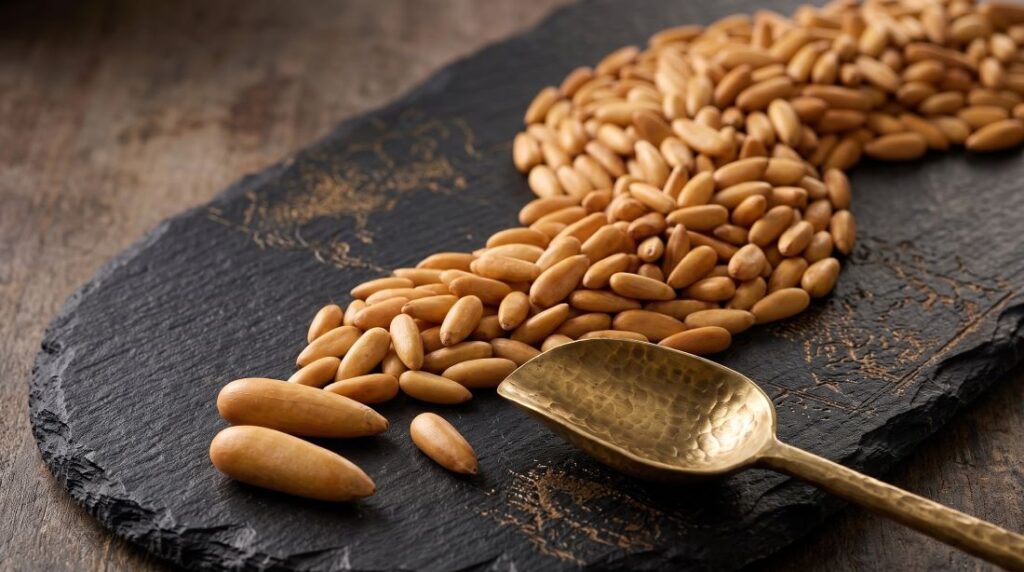
Pine nuts are edible seeds harvested from certain species of pine trees. They have been consumed for centuries and are used in cuisines throughout the Mediterranean, Middle East, Central Asia and other regions.
Their defining characteristic is their delicate, buttery flavor and soft texture.
Pine nuts are particularly useful when an ingredient needs to add richness without overwhelming the other flavors in a dish.
Common applications include:
Research examining different nuts has found that pine nuts can have a particularly high proportion of polyunsaturated fatty acids, while also containing minerals and other bioactive compounds.
Pistachios are edible seeds from the pistachio tree. Unlike pine nuts, they are commonly consumed both as a snack and as a culinary ingredient.
Their recognizable green color, crunchy texture and characteristic flavor make them particularly popular in:
Pistachios also have a well-studied nutritional profile. Research on tree nuts has examined their fats, minerals, vitamins, phytochemicals and potential physiological effects.
Both pine nuts and pistachios can contribute useful nutrients to a balanced diet, but their nutritional profiles are not identical.
Both foods are relatively energy-dense because nuts and seeds naturally contain substantial amounts of fat.
However, their fatty-acid profiles differ.
Research comparing multiple nuts found that polyunsaturated fatty acids are particularly prominent in pine nuts, while pistachios are among the nuts characterized by substantial total fat and a strong contribution from monounsaturated fatty acids.
This distinction matters because not all dietary fats have identical physiological characteristics.
Both pine nuts and pistachios provide plant-based protein.
A 2024 analytical study examining nuts from multiple countries found substantial amino-acid concentrations across the foods studied, with ecological pine nuts showing particularly high measured amino-acid levels in that dataset. However, results should not be generalized to every pine nut because composition can vary by origin and production method.
Tree nuts and seeds can contribute minerals such as magnesium and potassium.
A comparative study of eight popular nuts found that nuts were generally rich in potassium and magnesium, although the amounts varied considerably between species.
Pine nuts and pistachios contain a range of bioactive compounds, including tocopherols and phenolic compounds.
Importantly, the presence of these compounds does not automatically mean that eating a particular nut prevents or treats a disease. Nutritional research should be interpreted in the context of the total diet and the strength of the evidence.
Both can fit into a heart-conscious eating pattern, particularly when they replace less nutritious snack foods.
Research has investigated the effects of different tree nuts on blood lipids. A network meta-analysis of 34 clinical trials involving 1,677 participants reported beneficial lipid effects for several nut-enriched diets, including pistachios. However, the authors also noted limitations in the quality and reporting of the available evidence.
This is an important distinction:
A food can be nutritionally valuable without being a medical treatment.
For people with specific medical conditions, dietary decisions should be based on individualized professional advice.
Neither pine nuts nor pistachios should automatically be considered a “weight-loss food.”
Both are energy-dense.
However, nuts can contribute to satiety because they provide combinations of fat, protein and fiber, depending on the specific nut and serving.
The practical issue is portion size.
Instead of asking:
“Which nut causes weight loss?”
A more useful question is:
“Which nut fits my overall eating pattern, portion size and nutritional needs?”
For everyday snacking, unsalted or minimally processed options can be useful alternatives to highly processed snacks.
This is where the difference becomes particularly obvious.
Pine nuts generally have:
Their relatively gentle flavor makes them excellent for recipes where the nut should complement rather than dominate other ingredients.
Pistachios generally have:
Their recognizable flavor makes pistachios especially useful when the nut itself is intended to be a major part of the product experience.
The two nuts can sometimes be substituted, but they do not produce identical results.
For example, replacing pine nuts with pistachios in pesto can create a delicious alternative, but the flavor becomes more pronounced and the texture may change.
Pine nuts are traditionally associated with classic pesto because their mild buttery flavor blends naturally with basil, garlic, cheese and olive oil.
Pistachios can also be used to create pistachio pesto.
The result is generally:
Therefore, the choice depends on the desired culinary identity rather than a simple nutritional ranking.
Pistachios have a particularly strong presence in desserts because their color and flavor are immediately recognizable.
They are frequently used in:
Pine nuts, meanwhile, work particularly well in:
Pine nuts can provide richness and texture without creating the same strong visual identity associated with pistachios.
For food manufacturers, the comparison goes beyond nutrition.
Important considerations include:
Manufacturers should determine whether the nut is intended to be:
Different nuts require different handling, storage and processing approaches.
Potential value-added pine nut products include:
Pistachios can be developed into:
Because nuts contain significant amounts of unsaturated fats, appropriate packaging, storage conditions and quality control are important for maintaining freshness.
Origin, harvest variability, processing infrastructure, transportation and market demand can influence commercial availability and pricing.
A 2026 study of the Portuguese pine nut value chain identified challenges including yield variability, price volatility and limited innovation, while highlighting the potential role of investment and collaboration in developing the sector.
One of the most interesting developments in the pine nut sector is the move toward full-value utilization.
Researchers are investigating by-products rather than treating them simply as waste.
For example, a study examining pine nut processing skin found substantial carbohydrate and fiber content and investigated its nutritional characteristics, bioactive potential and possible recycling applications.
This reflects a broader food-industry trend:
Premium food production is increasingly moving toward circularity, waste reduction and value-added processing.
Instead of focusing exclusively on the edible kernel, processors can investigate opportunities involving:
This creates opportunities for manufacturers looking to develop new pine nut products.
Sustainability cannot be determined simply by declaring one nut universally “better.”
Environmental performance depends on factors such as:
For pine nuts, forest-based production adds another layer of complexity because harvesting can be connected to broader forest ecosystems and non-timber forest product economies.
Recent research into pine nut value chains highlights the importance of governance, innovation, processing capacity and socio-ecological conditions in determining how these products develop commercially.
Versatility depends on the application.
Pistachios have a particularly broad role in snacking and confectionery because consumers recognize their distinctive taste, color and texture.
Pine nuts are especially versatile as culinary ingredients because their subtle flavor works well in savory dishes, sauces, salads, bakery products and specialty foods.
For premium ingredient applications, pine nuts can provide a different positioning from pistachios rather than directly competing with them.
Pricing can fluctuate substantially.
Factors influencing nut prices include:
Therefore, a responsible comparison should avoid claiming that pine nuts or pistachios are always cheaper.
For buyers, the more useful approach is to compare:
Price per usable kilogram + quality + grade + origin + processing + packaging + consistency of supply.
This is particularly important for wholesalers, retailers, restaurants and food manufacturers.
Neither should automatically be considered universally healthier. They have different nutritional compositions and can both contribute useful nutrients to a balanced diet.
Both contain substantial amounts of fat, but the type and proportions of fatty acids differ. Research has found pine nuts particularly notable for polyunsaturated fatty acids, while pistachios have a substantial monounsaturated-fat contribution.
The answer depends on the product, origin and nutritional dataset being used. Both provide plant protein, and measured composition can vary.
Yes, in many recipes. However, the flavor, texture and appearance will change.
Sometimes. Pine nuts can work as a substitute in selected recipes, but they generally provide a softer texture and more delicate flavor.
Pine nuts are the traditional choice for classic pesto. Pistachios can create an alternative pesto with a stronger nutty flavor and distinctive color.
Both can be suitable. Pistachios are particularly well suited to snacking because of their texture and distinctive flavor, while pine nuts are often used more as an ingredient or topping.
They are botanically different foods, although both are commonly grouped within the broader culinary category of nuts. People with food allergies should follow advice from a qualified healthcare professional regarding individual foods and cross-contact.
Pine nuts and pistachios are both premium, nutrient-dense foods, but they serve different culinary and commercial roles.
Choose pine nuts when you want:
Choose pistachios when you want:
The most meaningful comparison is therefore not simply “pine nut vs pistachio—which one wins?”
It is:
Which nut best matches your nutritional needs, recipe, product formulation, target customer and intended application?
For consumers and food businesses alike, understanding origin, quality, processing, freshness and composition can be more useful than relying on simplistic claims about one nut being universally superior.
For buyers looking for premium pine nut ingredients, Afghan pine nuts represent a distinctive origin category with growing opportunities across international food markets.
A professional pine nut supplier should be able to provide clear information about:
For B2B buyers, restaurants, food manufacturers and distributors, the right supplier is not simply the one offering a nut at the lowest price. Consistent quality, traceability, processing standards and dependable supply are essential components of long-term sourcing.
RG Pinenuts specializes in supplying premium Afghan pine nut products, including pine nut kernels and value-added products such as pine nut oil and pine nut butter.
For businesses interested in premium Afghan pine nuts, the opportunity extends beyond a single ingredient: pine nuts can serve as a foundation for gourmet foods, specialty ingredients, retail products and innovative value-added applications.
| Category | Pine Nuts | Pistachios |
|---|---|---|
| Flavor | Mild and buttery | Distinctive and nutty |
| Texture | Soft and creamy | Crunchy |
| Best-known culinary use | Pesto and sauces | Snacks and desserts |
| Savory applications | Excellent | Excellent |
| Dessert applications | Excellent | Excellent |
| Visual appeal | Subtle | Strong |
| Oil potential | Yes | Yes |
| Butter/paste potential | Yes | Yes |
| Premium ingredient potential | High | High |
| Best choice | Depends on application | Depends on application |
Pine nut or pistachio? The right answer depends on the purpose.
For nutrition, culinary performance, food manufacturing and commercial sourcing, both offer valuable characteristics—and understanding those differences allows buyers and consumers to make better-informed choices.
Nutrition information can vary according to species, cultivar, origin, growing conditions, processing and serving size. This article is educational and is not medical or dietary advice.